
It's late September and the stubborn summer heat is still lingering. I recently conducted an in-house UL (ultralight) hiking training session, so I thought I'd write a report on it.
Many people may be wondering, "What is UL Hiking Training?" This is an experiential training program involving a two-day, one-night hike that was organized after we became involved with a certain outdoor gear manufacturer. It was conducted under the hypothesis that hiking with the UL spirit would lead to positive realizations in both work and everyday life. (This is also a theme of the Kamiyama Hiking Club .) UL hiking has brought about a major change in my life. Now I've decided to organize this program, hoping to convey even a little of the essence of it to everyone at work.
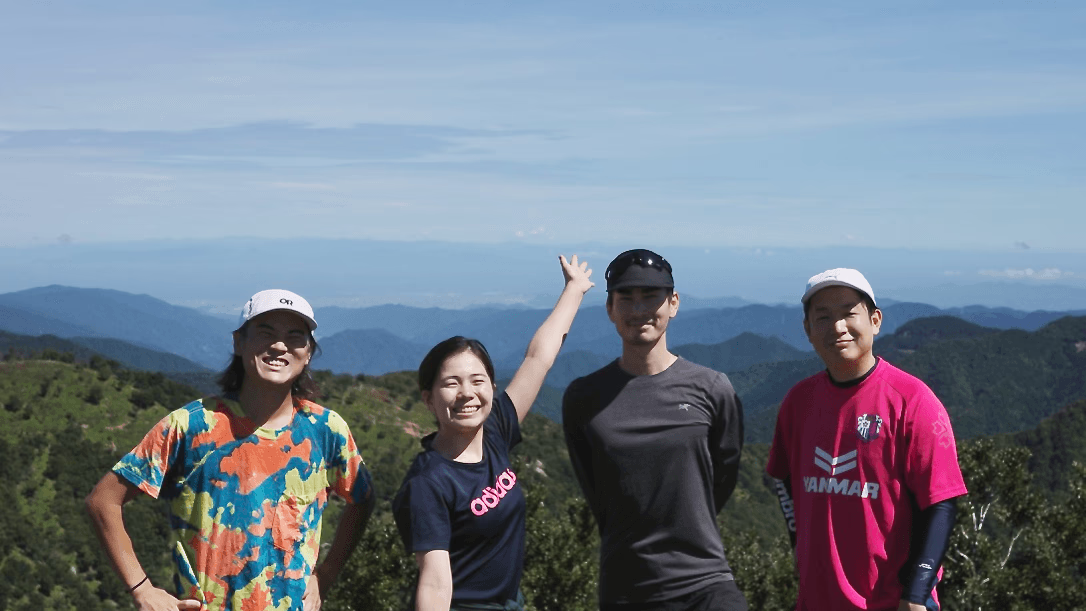
The three members who participated in this training were: All of them had some experience with exercise, but it seemed like this was their first time hiking.
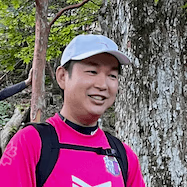
- Zhang
She is in charge of the back office at Monosus. After getting married and raising children, she tried various things to avoid trading off her career and life, and felt that UL hiking was an ideal fit for her.
King
I work in the back office at Monosus. I'm a minimalist. I don't own many things and I try to live with as little luggage as possible. I was deeply impressed with the concept of UL hiking and decided to participate in this training.
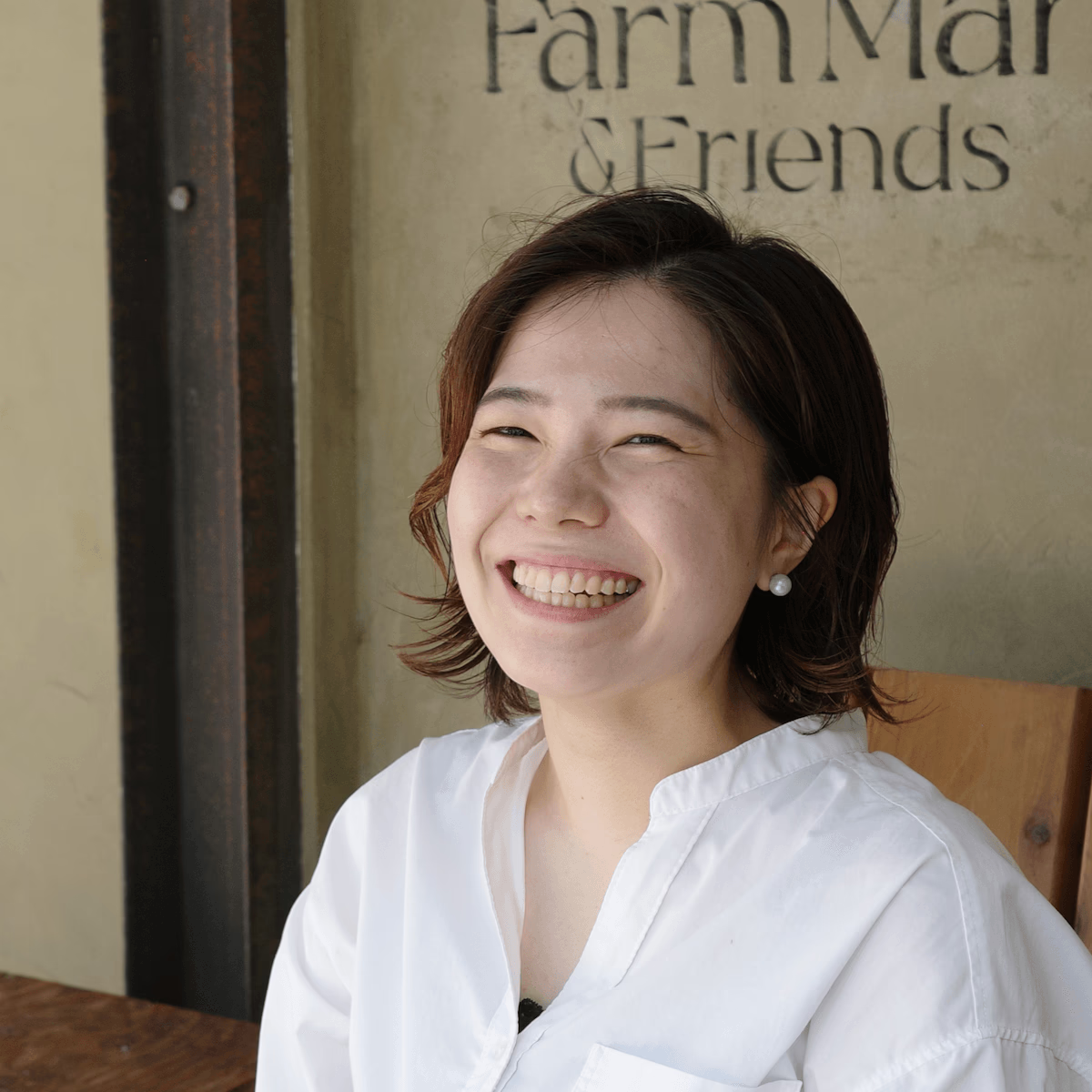
Mochizuki
He is in charge of the back office at Monosus. Since he became addicted to solo travel, he has been able to travel around Japan with ease, but he usually lives surrounded by things, which is far from the UL lifestyle.
Lectures
First, we gathered in a conference room at our Yoyogi headquarters and set aside time to learn about UL. Even though it was hiking training, we didn't just head out to the mountains, but rather thought it would be better to first take in information, prepare, and then go hiking to confirm that information. In order to make the UL hiking training even better, we conveyed two main points during the lecture.
The first question is, what is UL?
I think there are many people who don't even know what UL means. I think they might think of something like Uniqlo's down jacket. I used to be one of them too. Here's an excerpt from the materials used in the lecture:
The other question is, "Why do we hold UL hiking training at a company?" When the employees who participated told their friends outside the company about this training, they were surprised and asked, "Why do we hold such training at a company?" We will explain this point using excerpts from the materials for the classroom lecture.
What I particularly wanted to convey was that making things lighter is not the goal. Lighter is merely a means to an end, and I hope that once you have lightened up, you will reassess how you choose things and how you think, and gain hints for thinking about how you work and live. It has been very difficult to put into words what I have felt through UL hiking, and I was worried about how I would have conveyed it. Nevertheless, I concluded the lecture by deciding to try putting this into practice first.
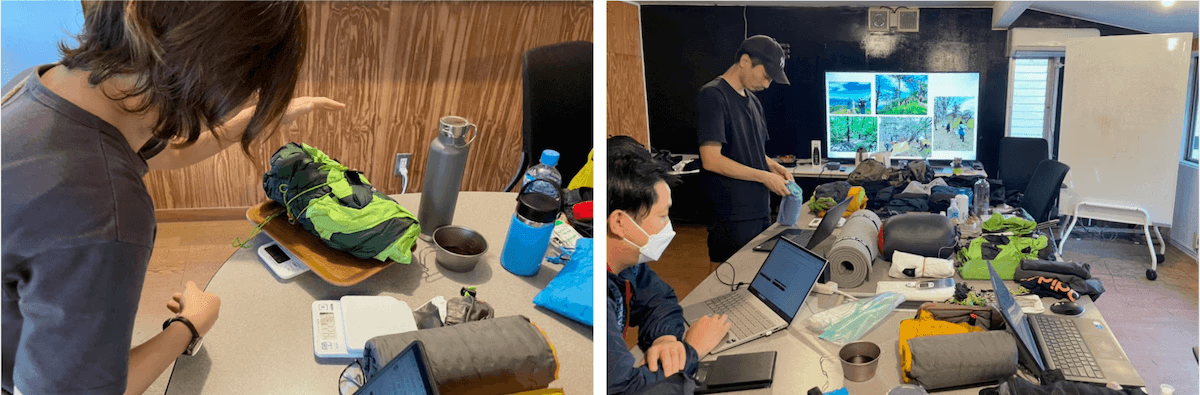
After the lecture, the participants lined up the tools they would actually use, weighed them, and created a list.
Preparation and movement
The practical session took place about two weeks after the classroom session. The setting was Mount Unso, a rural mountain in Kamiyama Town, Tokushima Prefecture, where the Monosus Kamiyama office is located. It was about a four-hour journey from Yokohama, where I live, by train, plane, and car. I boarded an early morning train and headed for Haneda Airport. As I shoved the straps of my backpack, which was much heavier than my usual business trip luggage, into my shoulders, I remembered something Toyoshima Hideki had said: "The weight of luggage is the weight of anxiety." I think I was filled with anxiety about taking everyone into the mountains, and anxiety about whether the training would produce any results.
We arrived at Tokushima Airport and drove to Kamiyama Town in a rental car. In the car, I talked with Zhang, who was helping me design this project, about what we wanted this training to be like in the end.
We set out the items we wanted participants to think about during the training, and while allowing a certain amount of freedom, we only told them the framework we wanted them to think about. Since the aim of this training was for participants to take home some kind of hint for their daily work and life, we decided to tell them this in advance.
I later found out that this setting was the key to the training. (Continued in review)
When hiking, there are many things you need to decide, such as the purpose, schedule, and transportation arrangements, but sometimes it's best not to decide too much. The same is true when I plan hiking trips for leisure; it's very important to find the right balance.
Think about the date, route, and places to stop, as well as what to do if things don't go as planned. Hiking often doesn't go as planned, depending on factors like the weather, the state of the other participants on the day, and road congestion. (A route that changes plans and allows you to descend the mountain midway is called an escape route. It's important to have an escape route in mind.)
Be prepared, but not overprepared, and be prepared for anything. I think a lot of the appeal of hiking is in the preparation.
After moving, we first visited the Kamiyama office. We were happy to be reunited with the members working in the Kamiyama office and exchanged greetings with people we hadn't seen before. After that, we each went about our normal work, and in the evening we started selecting and packing our gear for the next day. We took the time to take stock of what we would be taking with us on our two-day, one-night hike the next day, and what each item would be used for.
None of the participants had any of their own gear (mountain equipment), so we simply laid out the items we had borrowed, such as backpacks, tents, sleeping bags, mats, gas and alcohol stoves, on the tatami mats. We explained most of the features and usage methods of each, and had them choose the one that best suited their image. Even just for tents, there were several types available, including one-pole shelters, bivies, and freestanding tents. Before actually using them, participants first understood the characteristics of the equipment, such as ease of erection, lightness, and comfort. Then, by actually pitching it and sleeping in it in the mountains, they gained solid knowledge. I think that repeating this process leads to hiking that is unique to them. The same can be said for work.
Once you have decided on the tools, it's time to pack. Put your belongings into your backpack.
When doing this, it is important to pay attention to the order and method of putting things in. Put in items that you will not use right away and that are lighter first. This is to make it easier to quickly take out what you need when you need it, and by putting heavier items at the top, the center of gravity will be stabilized and it will be easier to walk.
We also gave each other advice as we packed our belongings, such as taking some items out of the pack and packing them in to maximize density, or leaving space for water and food. We wondered things like, "Can I fit this much in?" and "Which pocket should I put this tool in?" and it was a time when we looked forward to finding out the answers on the next day's hike.
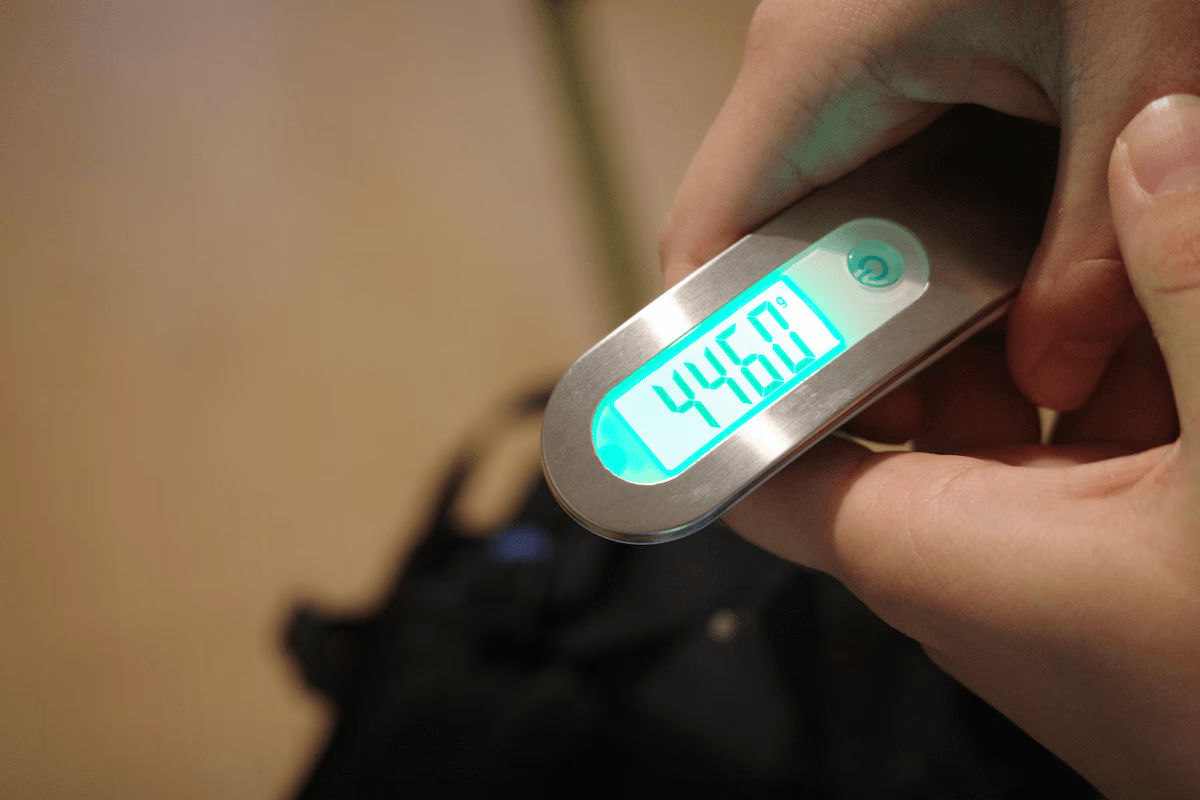
We measured the final base weight (total weight of luggage minus water and fuel) on a hanging scale. Everyone else's weight was within the UL range of 3.8kg to 4.5kg, but mine was a fairly heavy 7kg.
After packing, we had dinner. Members working in Kamiyama also gathered and made okonomiyaki, which was a lot of fun. One of the attractions of off-site training is that members who don't usually see each other can get together and eat together.
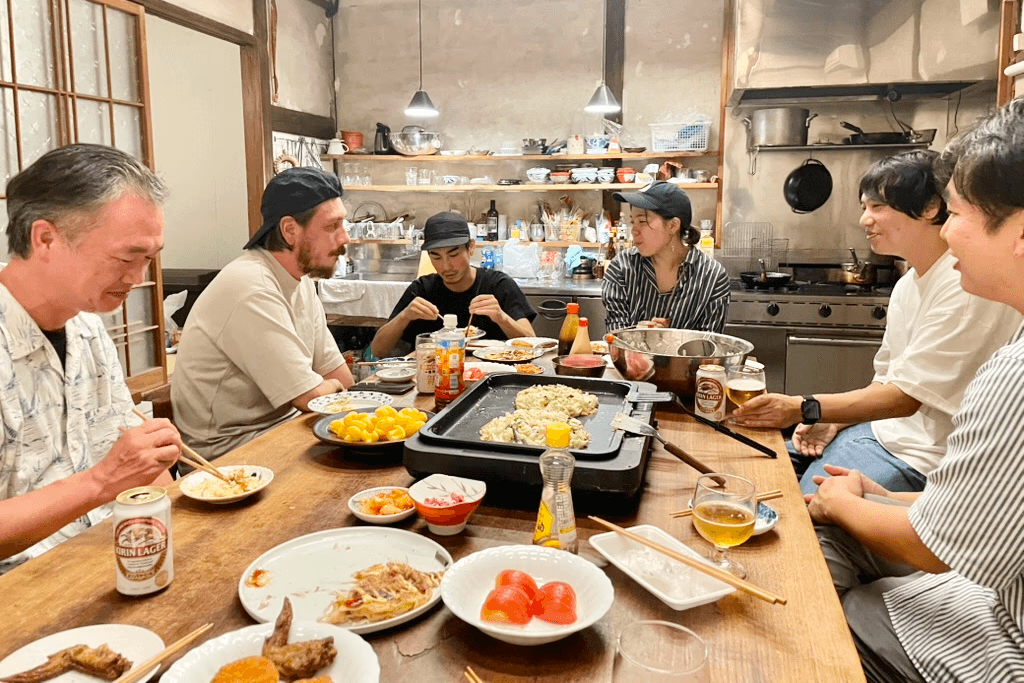
We set up a hot plate on the table and talked about our daily lives while grilling okonomiyaki.
The day ended with travelling to Kamiyama, packing, and interacting with members who live in Kamiyama. I think that interacting with the people who live in Kamiyama before heading into the mountains makes the training in the mountains even more profound. The next night, the lights of the town seen from the top of the mountain brought back memories of these ordinary moments in daily life.
Hiking and mountain accommodation
The first day of the hike. We all woke up just after 5am and started getting ready, rubbing our sleepy eyes. Thanks to having already done most of our preparations the day before, we were able to set off smoothly. We gathered at a convenience store and bought breakfast to give us energy, water for the hike, and food. We ate bread, rice balls, coffee, etc. on the spot or put them in our backpacks to eat while hiking. This was where we made our final preparations.
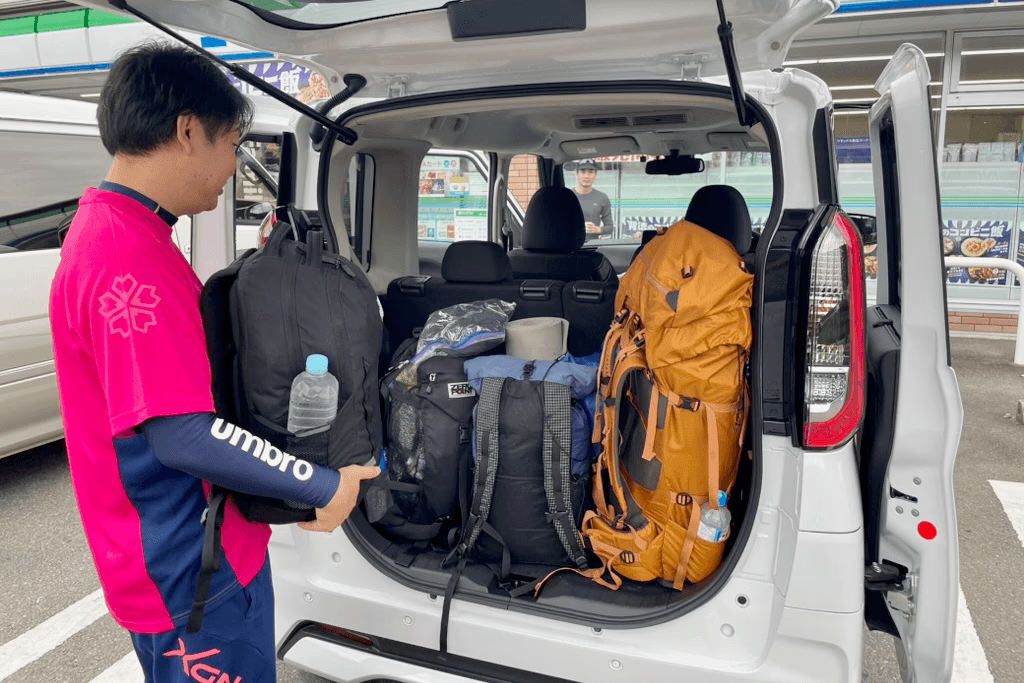
"I managed to get it in!" Zhang said with relief. That night, he noticed that the food was popping inside.
We headed to the base of the mountain, shared the rough route and time allocation on our smartphone screens, and then started hiking. The hiking course this time took about four hours one way. We took a leisurely walk, taking breaks along the way, and headed for the summit. Once we passed the peak, we looked for a campsite, set up the tent, walked around the area, had dinner, and went to bed. That was the planned flow.
Everyone started walking with excited expressions on their faces, some exclaiming in surprise at the sudden downward slope, and others immediately washing their faces in the stream at the entrance.
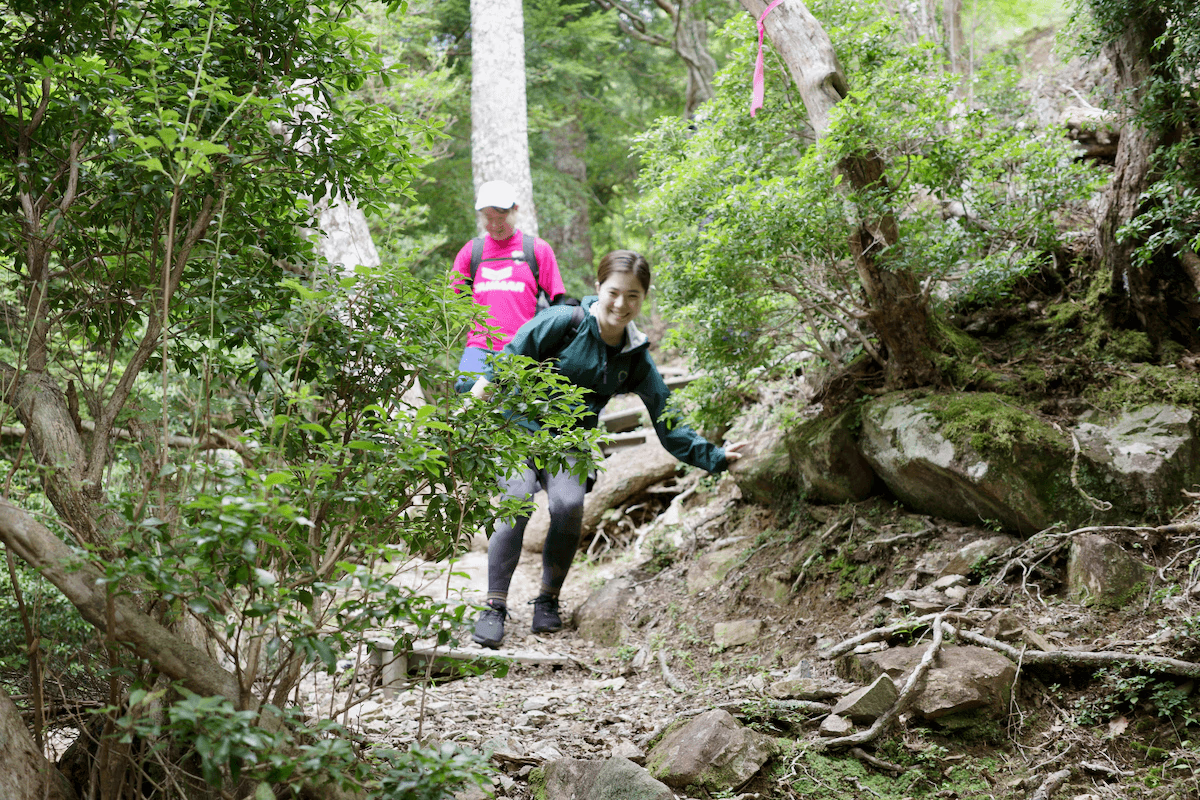
After walking for about an hour, I reached the ridgeline. A ridgeline is a mountain ridge, and following this line would take me from one mountain to the next. The wind blowing up from the southwest cooled the sweat that had been released, making me feel a little chilly. I took out the wind shell I had stored in my side pocket and adjusted my temperature.
Along the way, we looked up directions and talked about which way to Tokyo, and we also reviewed the gear we had brought with us.
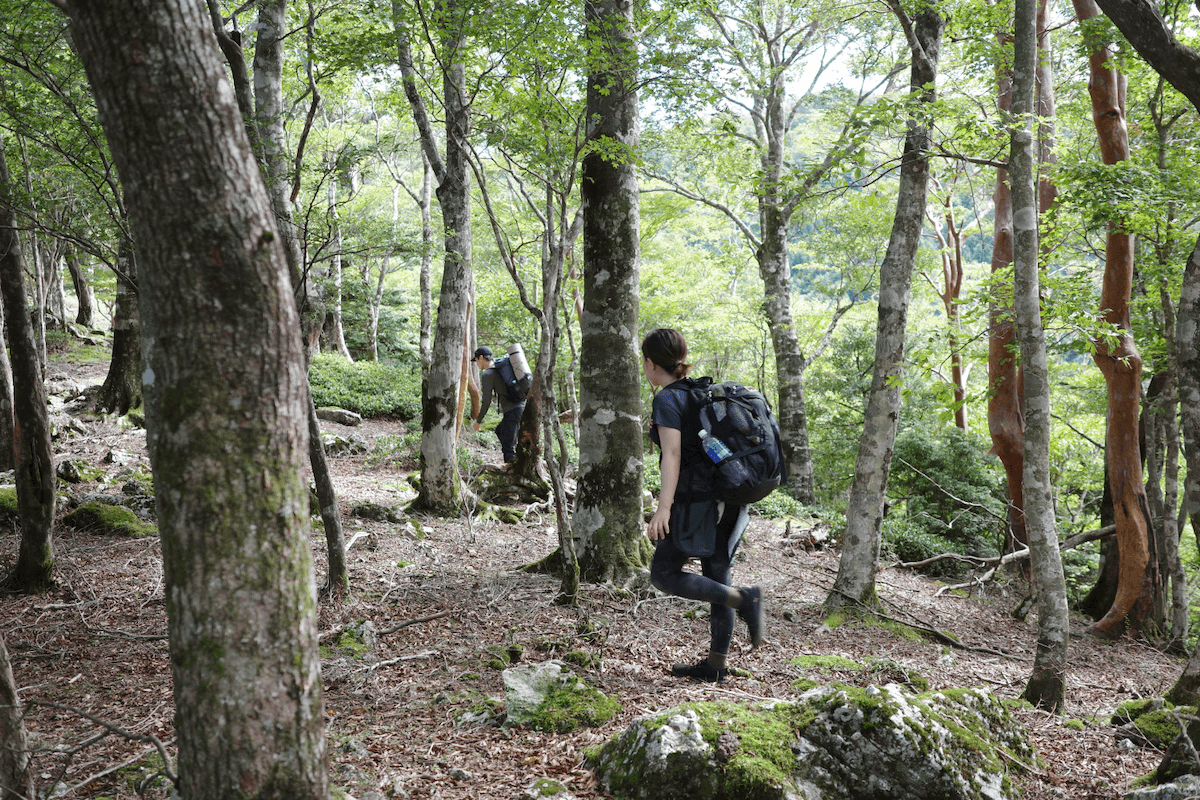
Along the way, we looked up directions and talked about which way to Tokyo, and we also reviewed the gear we had brought with us.
We decided to come out onto an open road with a great view and have lunch.
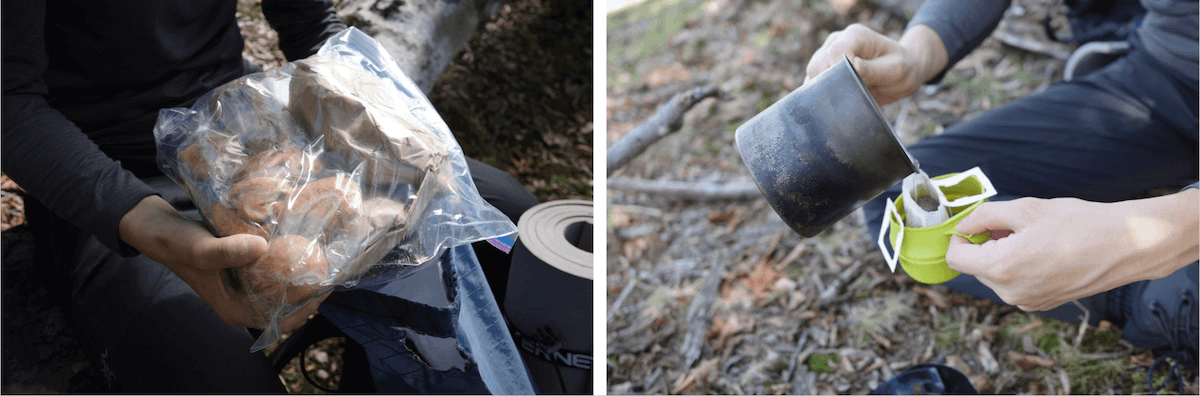
Rice balls, bread, side dishes, coffee... Everyone spread out what they wanted and enjoyed it. Zhang said it was great to be able to eat bread from Kamapan (a bakery in Kamiyama Town run by the Food Hub Project, a Monosus affiliate) in the mountains! King tried to make coffee using a drip bag, but only realized for the first time that he needed two cups, one for boiling water and one for the server.
Watching this, I gradually came to realize that there must be a different circuit at work when talking about something and when actually doing it.
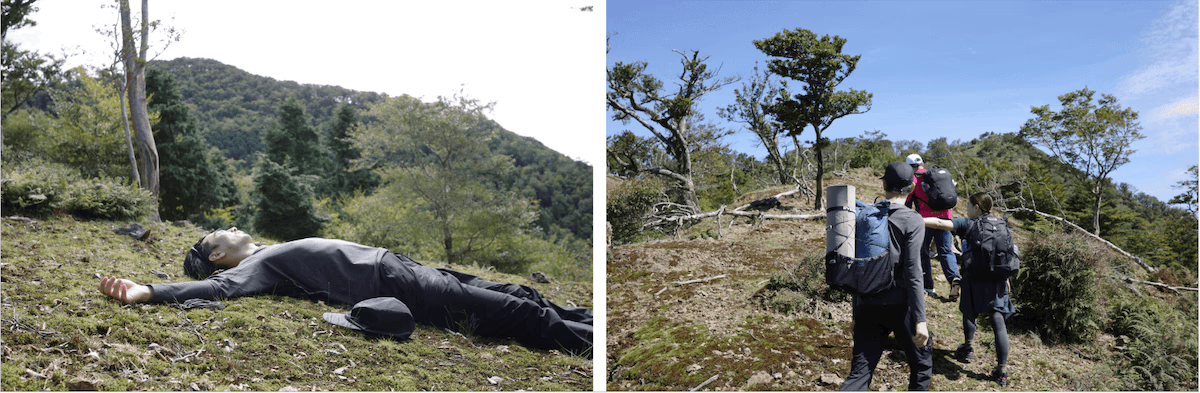
After lunch, we walked for about an hour, and the plants around us started to get shorter. We could clearly see the nearby mountains, and we knew we were getting closer to the summit. We were finally at the top of Mount Unso. When we reached the top after the last steep climb, we could see the satisfaction of having accomplished something from the smiles on everyone's faces.
Pointing at the ridge from the summit, we discussed where we should stay the night. Points that looked close by turned out to be more than 30 minutes away when we walked there. I realized that the sense of distance is different between the cityscape with its sprawling buildings and the mountaintop with few obstructions.
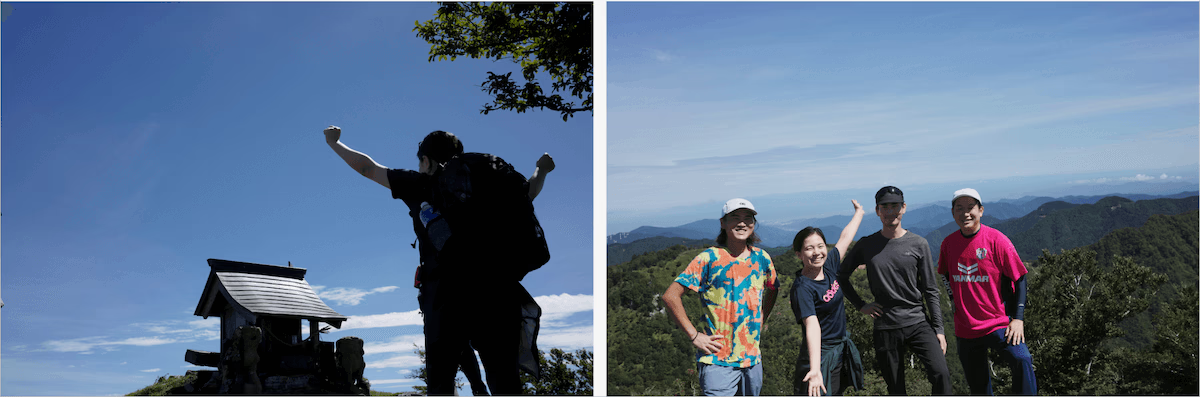
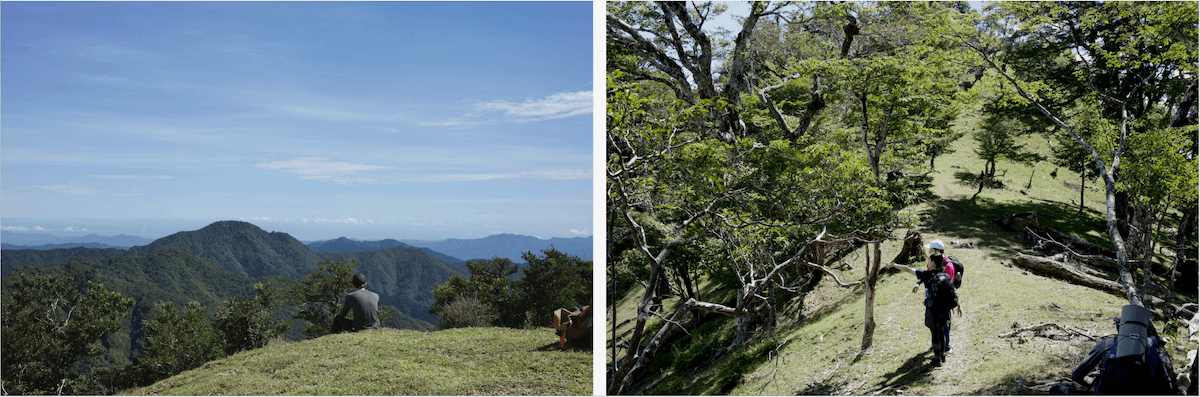
From there, we walked around looking for a place to set up camp. We looked around carefully, looking for a spot away from the hiking trail, and one that was as flat and open as possible.
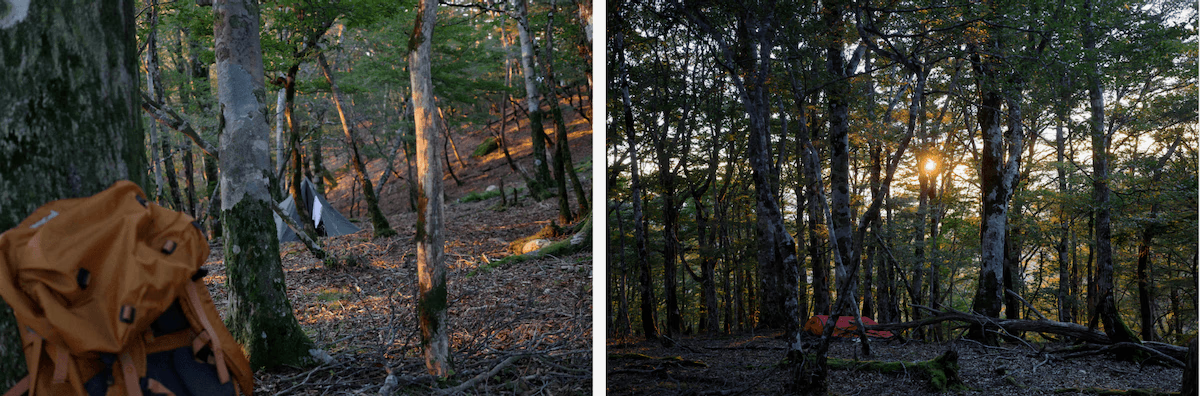
We found a good spot, put down our bags, and decided to set up the tent first. It was around 2 p.m. Normally, people would still be busy at work at this time on a weekday. However, in the mountains, it's preferable to set up the tent while it's still light out.
We each crunched through fallen leaves, searching for where to pitch our tents. Some places felt fluffy, others flat but narrow, and we lay down to find the place that would become our "home."
Once the locations were decided, we set up each of our tents, each with its own unique characteristics. Perhaps because it had rained a little the day before, the ground was soft, making it easy to insert the pegs. We set up the tents, feeling each step by touch, adjusting the tension and tying the strings.
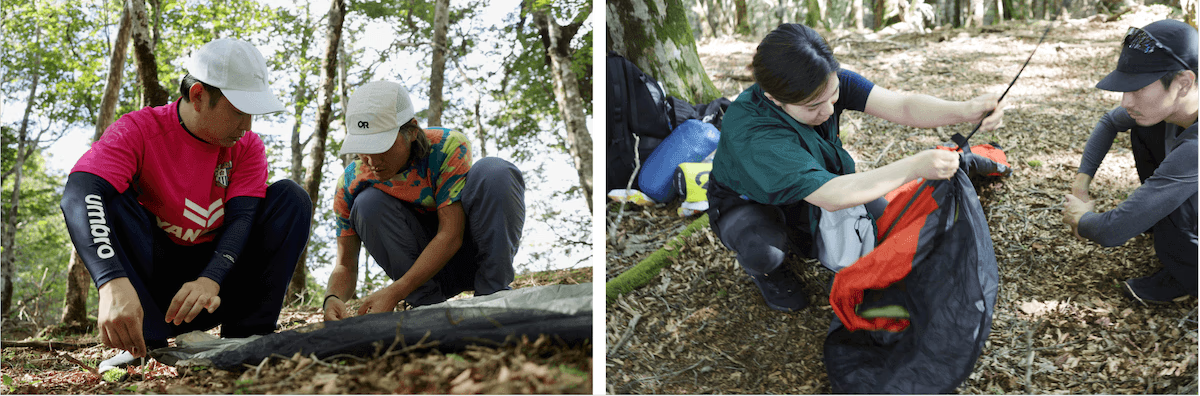
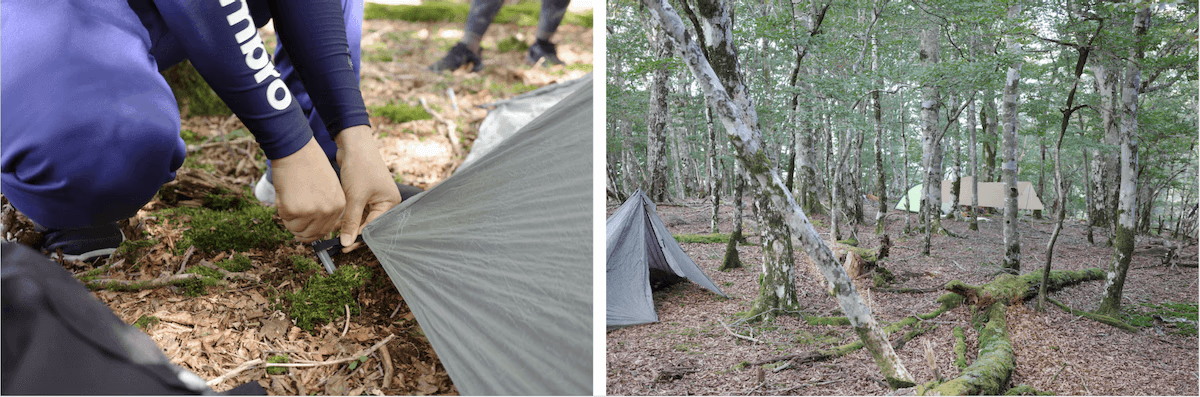
When the tents were finished and we looked around at each other, it felt like a town had been formed. Pointing to the flat area right in the center of the tents, we all agreed that this was the meeting place, and we were already looking forward to dinner. After that, we decided to take a break and explore the area. The slightly open area we had seen from the top of Mt. Unso was surely ahead.
Since I left all or part of my luggage at the tent site along the way, I felt light as if I had wings. I was especially excited by how light I felt, as I had been carrying a lot of luggage.
Along the way, I came across a road covered in dense, matcha-green moss, which looked like a luxurious carpet. Perhaps it was because my luggage was lighter that I noticed this.
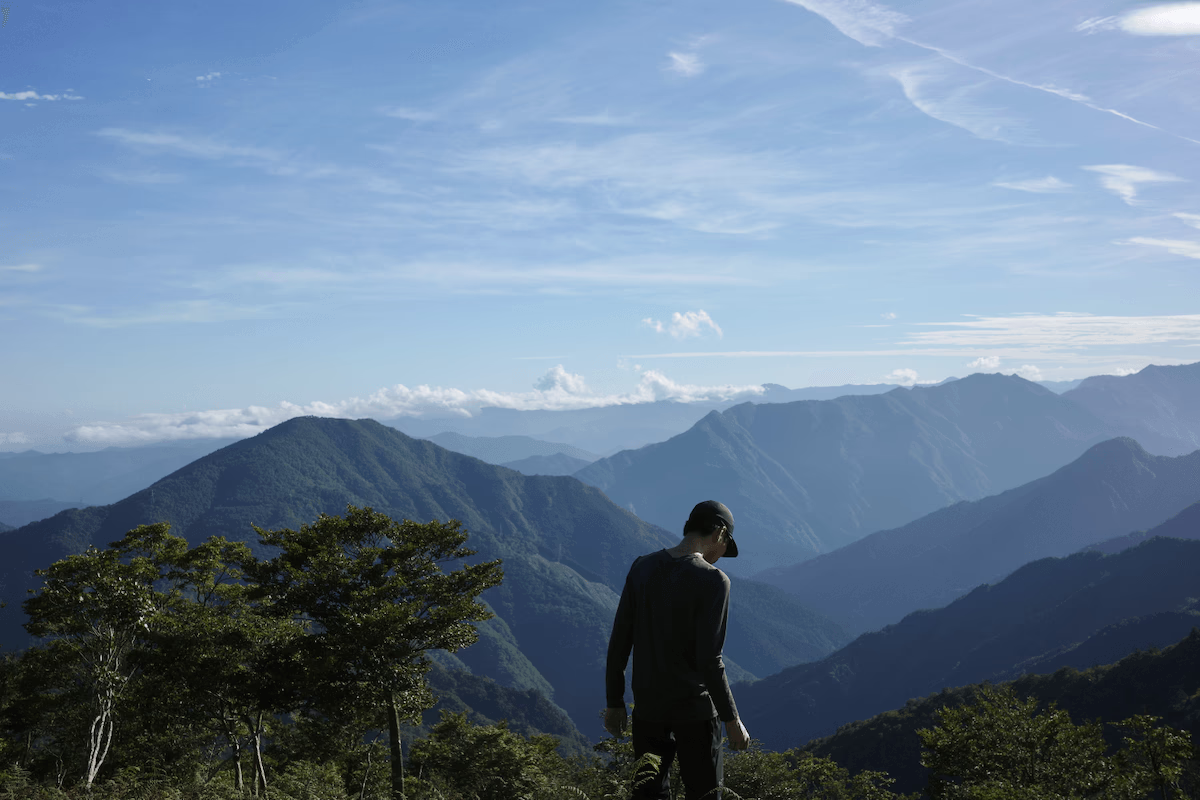
When I arrived at the open area, I was greeted by blue skies and autumn-like cirrus clouds, and I felt a sense of exhilaration as I remembered the path I had walked that day. I was happy to have come to the mountains in such a beautiful season.
We returned to the tent site and began preparing dinner. We had brought a small campfire pit with us, so we picked up some nearby wood and started a fire. The wood was damp and it was difficult to get the fire going, but we gradually changed the fuel from thin, small branches to thicker branches, and eventually the fire grew strong enough to cook with. We heated up the bread and canned goods we had brought with us, boiled water to make dry food, and cooked according to what each of us had planned, then exchanged our cooking results.
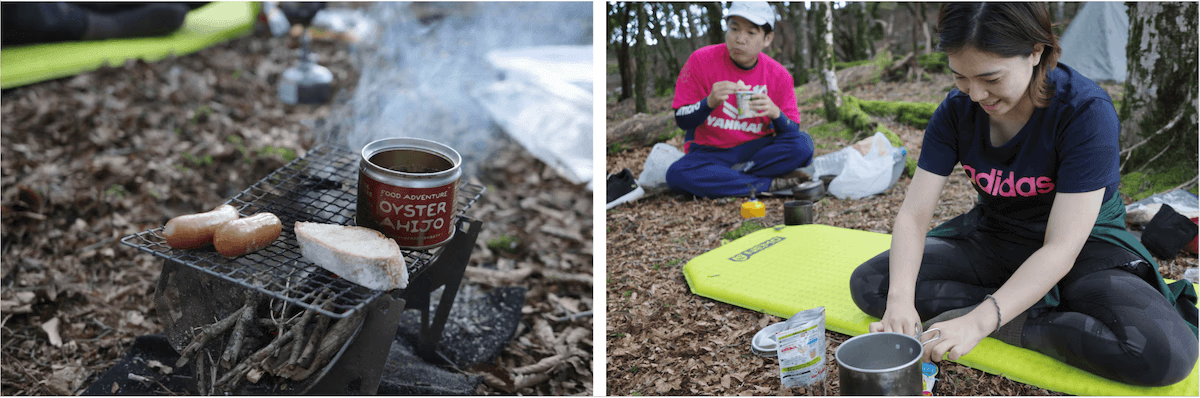
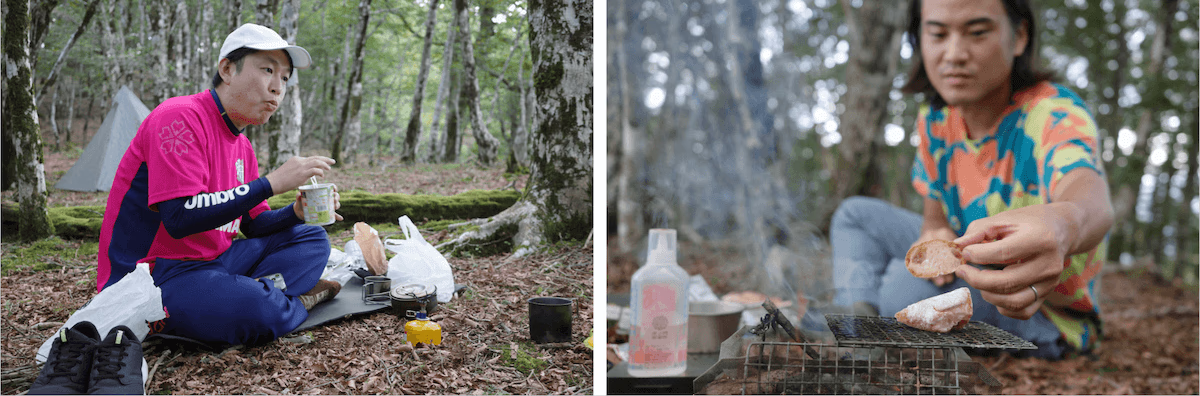
The best part of the dinner I prepared was the toasted rice flour baguette.
As we sat around the bonfire, the night gradually deepened. As it got dark, the surroundings became quiet, and the bonfire in front of us flickered gently. We simply watched it and listened to the sound of the wind blowing. We spent a luxurious time in the silence, with no one else around but us.
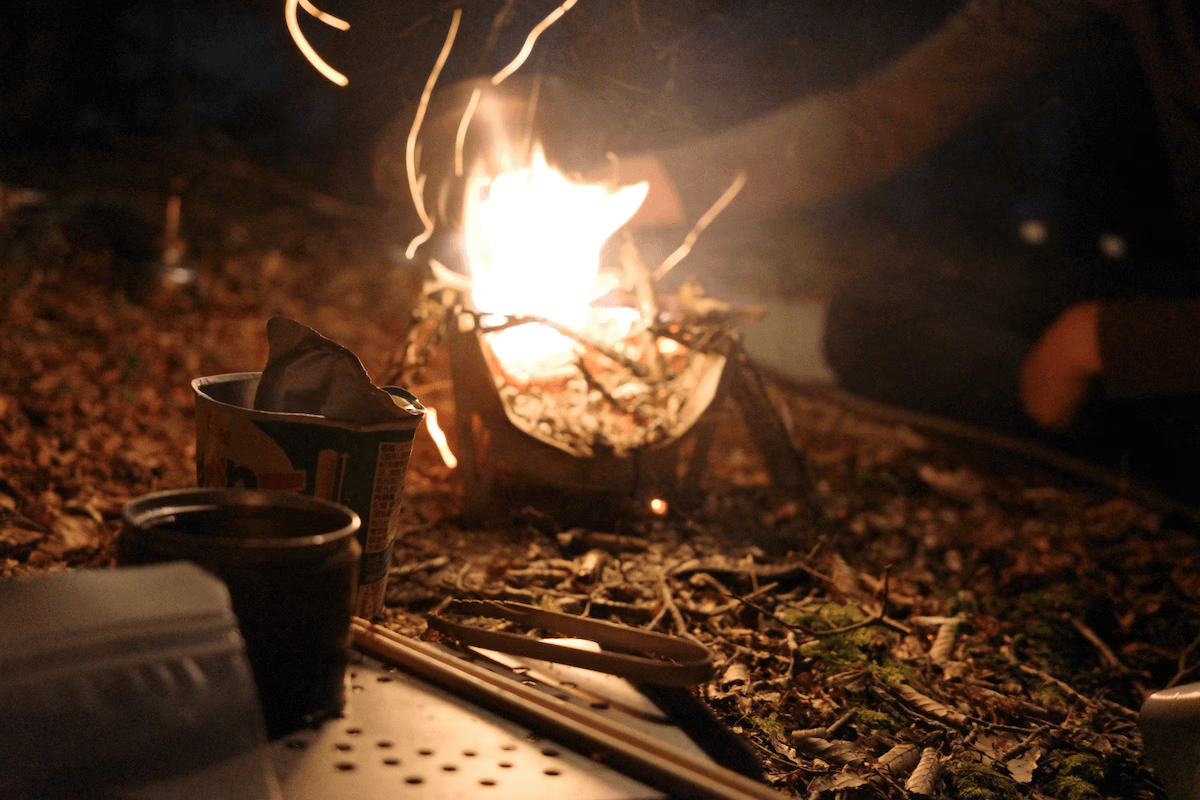
After eating, I decided to take a walk on the dark night road. The road was hard to find in the daylight and darkness, as if it were a completely different place, and I felt a little uneasy. Still, as I walked slowly relying on the light from my headlamp, my eyes gradually adjusted, and I realized that the moonlight was very bright.
Suddenly, I remembered that a few hours earlier, when I had walked the same path, I had commented that the moss here looked like a green carpet. When you feel something and put it into words and let it out, it can sometimes come back to life in an unexpected place. I discovered a green carpet glowing faintly in the moonlight, and was able to walk down the path with a sense of relief and security.
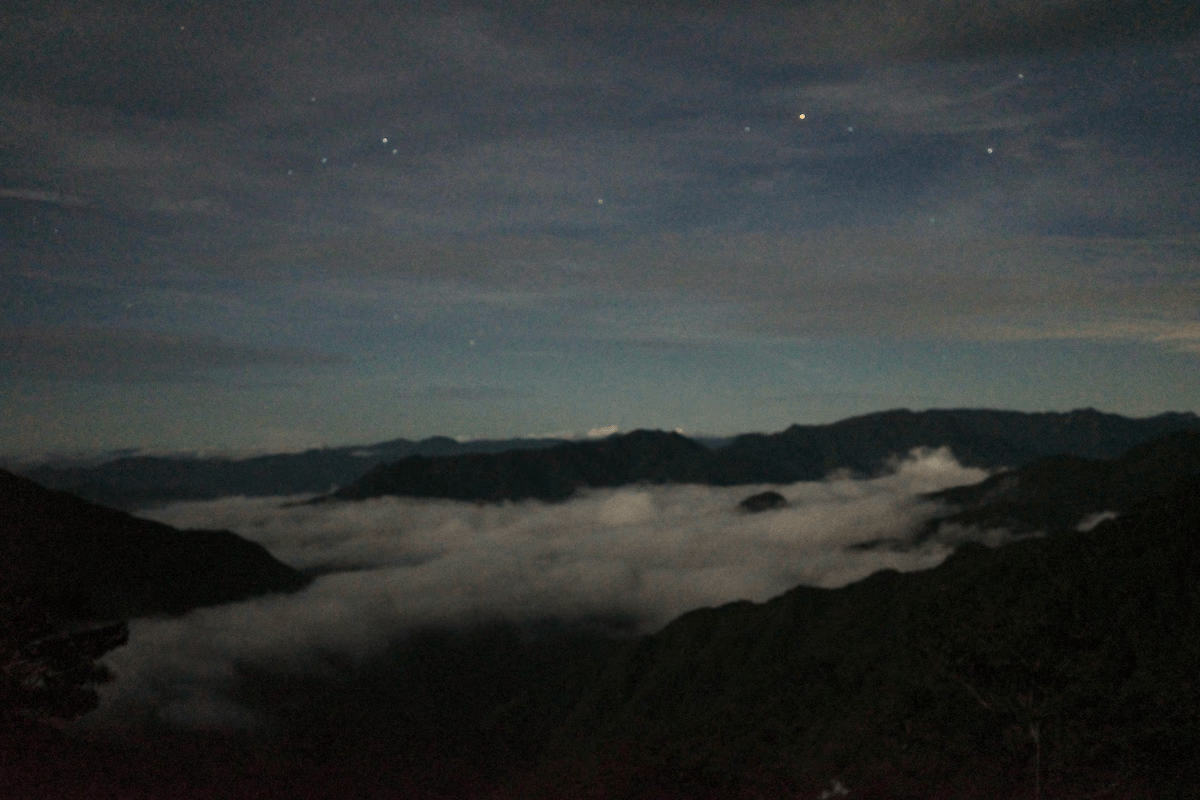
When I emerged into the open area, a sea of clouds spread out between the mountains on the other side. Unlike the view from the plane, the view from this distance was magnificent.
That was the end of the first day of hiking. I returned to my tent and sank into the softness of the mattress and fallen leaves for a deep sleep.
The next morning, descend
I woke up around 5:30 the next morning. The morning sun was rising, painting the surroundings a vibrant orange like a sunset. The air was cool and refreshing, so I took a short walk to a spot with a good view. Only a small part of the sea of clouds that had spread out the previous night remained in the distance. I returned to the tent site, made some coffee, and had a light breakfast. There's nothing quite like drinking coffee and bread while basking in the morning sun in the mountains.
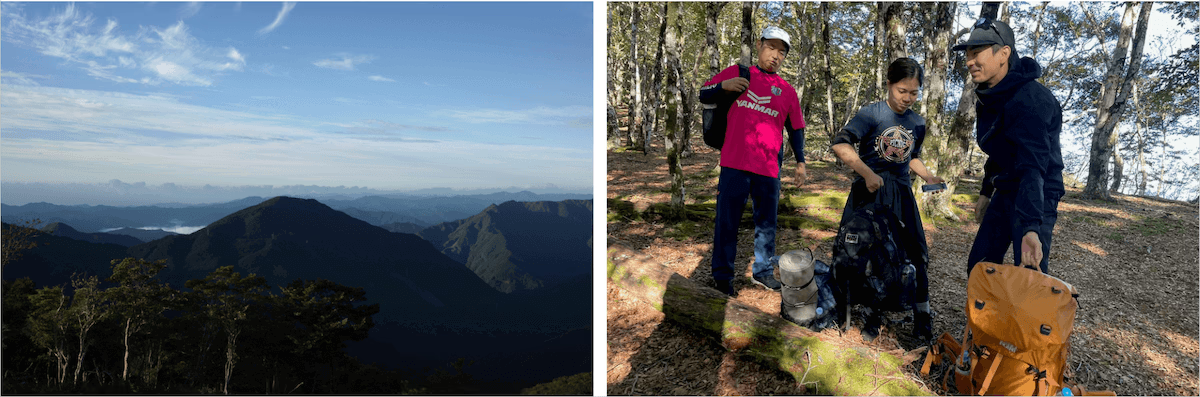
The second day's hike was mostly downhill, so it seemed like a relatively easy course. Everyone had gotten used to hiking in the mountains from the ups and downs the previous day, and we all started calling out to each other, which gave us a sense of unity.
When avoiding fallen trees, thorny branches, or pushing your way through vegetation, think of the person behind you and call out to them. It may sound like an exaggeration, but in the mountains, calling out like that can save someone's life.
As we often work in teams, we realized while hiking the mountains that it is important to use our imagination to think about what is happening ahead and what the people walking behind us are thinking, in order to reach the goal safely.
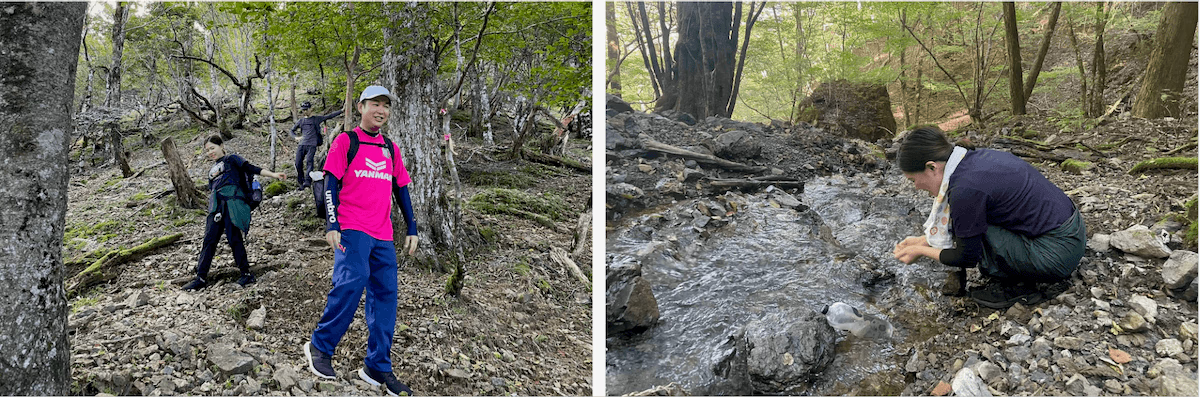
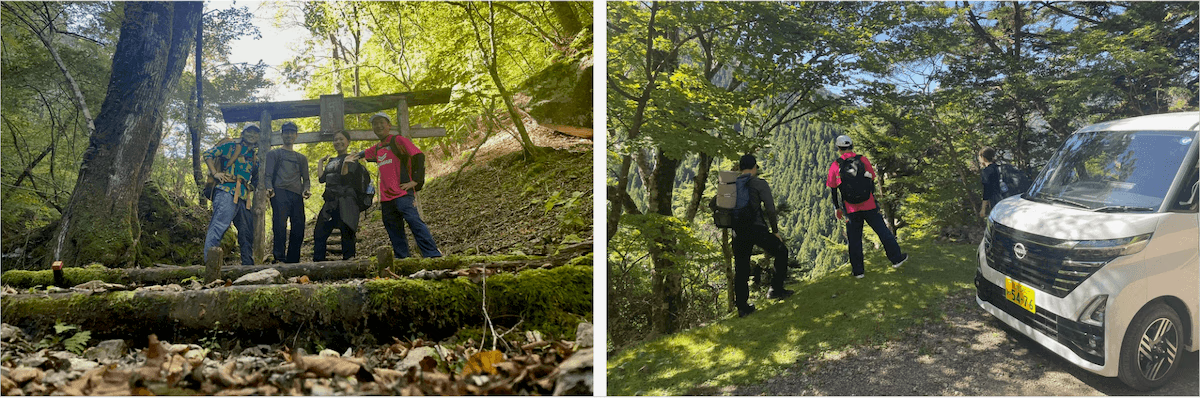
After walking for about two hours from near the summit, we finally reached the trailhead. There was a stream, and we splashed water over our sweaty bodies. King, who had just run out of water, jumped into the water and gulped it down as if he had found an oasis.
We walked slowly from the stream to where we parked our car along a gravel path known as the "Super Forest Road." From the forest road, we looked up at the ridge we had walked along the previous day and the day before. "So that's where we walked," we thought. As we talked, the mountain scenery somehow looked a little different than it had yesterday. Feeling sad that the hike was coming to an end, we arrived at the parking lot in no time. The paved road was very easy to walk on, unlike the mountain trails where we had to step over large logs and wobbly rocks.
We piled our luggage into the car and headed back to town. Everyone except for me, the driver, seemed to be dozing off, probably because we were all tired. Anyway, we were relieved to have made it down safely.
We returned to town, washed off the sweat at Kamiyama Onsen, and had lunch at Kamaya. The delicious meal was truly satisfying the day after spending time in the mountains. Ah, we're back in town, and here we felt a sense of relief.
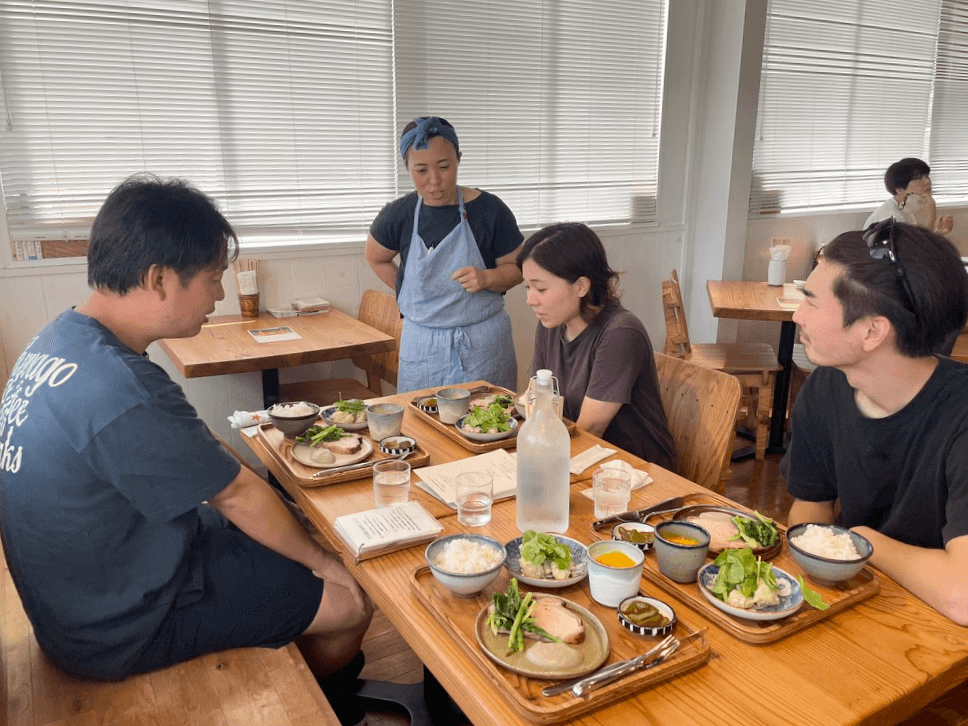
Introducing the menu by Kamaya's head chef, Mogu-san. Mogu-san's dishes are delicious even in their descriptions.
Looking back
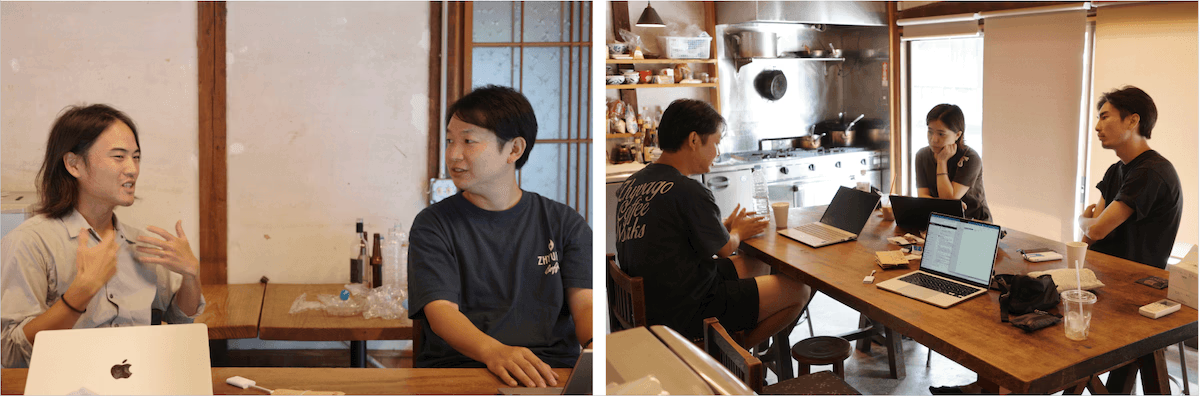
After lunch, we went to the office and had time to reflect. First, we had a writing session where each of us wrote down what we felt, and then we made presentations. The items we reflected on were as follows:
2. During activity (while walking in the mountains)
3. When stagnation occurs (resting between hikes, camping, dinner and breakfast)
4. After descending the mountain (morning - from the waterside/forest road to the car)
◆Perspectives for reflection ・What I felt through the UL hiking experience ・How it can be adapted to work and life ・Based on the above, is there anything I can do first?
In each of the situations 1-4, we discussed how we felt and how we could adapt to them. The following opinions were exchanged. Here are some excerpts:
1. Preparation and planning stage (classroom lectures, shopping, packing)
・UL hiking experience First, I made a list of the things I thought I would need for hiking. When I measured the total weight, it exceeded the weight limit defined for UL hiking.
From there, based on the standard weight, we asked ourselves, "What are the things that are really necessary?" and "Can we make one item fulfill two or more roles?" We then worked to eliminate things and considered whether "even if something is necessary, can we make it lighter by replacing it with something else?" and made the items lighter by carrying out the replacement.
- Realizations when adapting to work and life I faced the reality that in my everyday life, I tend to stuff this and that into my bag, making it heavy, or I make impulse purchases without thinking about whether I really need something, and before I know it, my living environment has become overflowing with things.
I realized that only by understanding the weight I can truly carry (my ideal level of ease of movement and comfort) can I choose what to keep and what to let go of. I want to plan my life by understanding what I need and how much I need.
2. During activity (while walking in the mountains)
・My experience as a UL hike Since I was climbing a mountain I wasn't used to, there were many moments when I was concentrating on my unstable footing. I felt like I was missing out when everyone else was enjoying the scenery and I didn't have the time to join them, but even as I kept looking at my feet, I noticed that the color and type of fallen leaves were different depending on where I was walking, and that the feel of the soil had changed slightly - I was becoming more sensitive to the sensations transmitted through my feet. Also, perhaps because I felt more open-minded when I was in nature, I felt like I had a lot of time to ask people things and talk about things I wouldn't normally ask.
When I looked at the situation again, I realized for the first time that the weight of the luggage I was carrying was not a major concern when climbing the mountain.
- Realizations when adapting to work and life We tend to spend our days carrying a lot of things, such as information that unconsciously comes in from the outside and thoughts that go round and round in our brains, but by lightening the load we carry, we have more space in our minds, and I felt that this allowed me to take a step back and look at things, or to focus on what I really wanted to concentrate on.
3. When stagnation occurs (resting between hikes, camping, dinner and breakfast)
- Experience as a UL hike When taking a break between hikes, I thought it was great that the backpack was light and easy to take off, so I could take a quick break. And when it was time to resume hiking, I could also quickly start walking again. When I took off my backpack, sat on a rock, a fallen tree, or the ground, and concentrated on looking at the scenery around me, I was able to feel the magnitude of the mountains and the beauty of the lush green trees, and I realized that this is what it means to "become one with nature," which is the essence of UL hiking. It was a very comfortable time, like a cleansing experience. If my backpack had been heavy, I would not have had the time to focus on the scenery around me.
When I arrived at the campsite and set up the tent I borrowed from Manabe, I thought to myself, "What was so light and compact had quickly transformed into a tent that felt even more comfortable to sleep in than I had imagined, and I was amazed at how well-made UL hiking gear is. Sure enough, I slept soundly and with peace of mind."
At dinner, I realized I didn't have enough water. No wonder my backpack was so light. It made me realize that making everything lighter isn't the best thing to do. I realized that my optimistic nature had backfired on me.
It was a fun night spent sitting around a campfire in the dark mountains, talking about work and other trivial things. There was no table, no feast, and I didn't even have water, but my heart was full. I realized that even without great possessions, you can have a good time just by being with friends who share the same goal.
Through these experiences, I was able to physically understand what it means to "know enough," something I had understood intellectually. Furthermore, the extra energy I gained from knowing enough allowed me to know when I don't have enough.
・Realizations when adapting to work and life When you want to solve a problem or improve something, you may try to fill in what is lacking and struggle with the unfilled gap, but I realized that thinking that what is enough is actually enough is a way of thinking that allows you to adapt to work and life.I also thought that it is precisely because you are in this state of sufficiency that you can clearly see what is truly lacking.
4. Descending the mountain (morning - from the waterside/forest road to the car)
・My experience as a UL hike As the hike neared its end, I was consuming water and food, so my load was lighter and I was impressed by the clearer view. When my load is heavy, I tend to lean forward and look down at my feet. As a result, I sometimes bumped into branches and leaves at eye level while hiking without noticing. As my load became lighter, my line of sight was raised and my view was clearer, giving me the time to look ahead and be mindful of my surroundings.
- Realizations when adapting to work and life When you feel suffocated at work or in life, you tend to only be able to look at what's right in front of you and your field of vision becomes narrow. I learned that by lightening the burden you're carrying (reducing the burden), your field of vision naturally broadens, which is how you can adapt to work and life. I experienced the need to create opportunities to reduce the burden "physically" and "systematically," rather than relying on willpower.
The retrospective meeting was a great success, lasting more than two hours, longer than originally scheduled. However, we still couldn't finish talking, and the conversation continued even in the car on the way to the airport. It made me happy to realize that there was so much we had felt.
I don't know how what everyone gained from this training will develop within them, but I hope that it will one day lead to better work, lifestyles, and lives. There are so many things around us that we won't know until we try them, and anxiety only changes shape when we take action. As the person who planned this training, it was a good time for me to feel that way too.
When I got home and unpacked my things, I was greeted by the fragrant smell of a campfire. This was the first time we had tried this training, but if we could continue with intermediate and advanced courses following the beginner's course, we might see a different reaction. I would like to continue this initiative in the future.
Finally, I would like to express my gratitude to my family and colleagues who sent me off despite being mostly offline during the two days I was in the mountains, to the Kamiyama members who welcomed me, and to the three members who participated. Thank you very much.

モノサスアーカイブ