
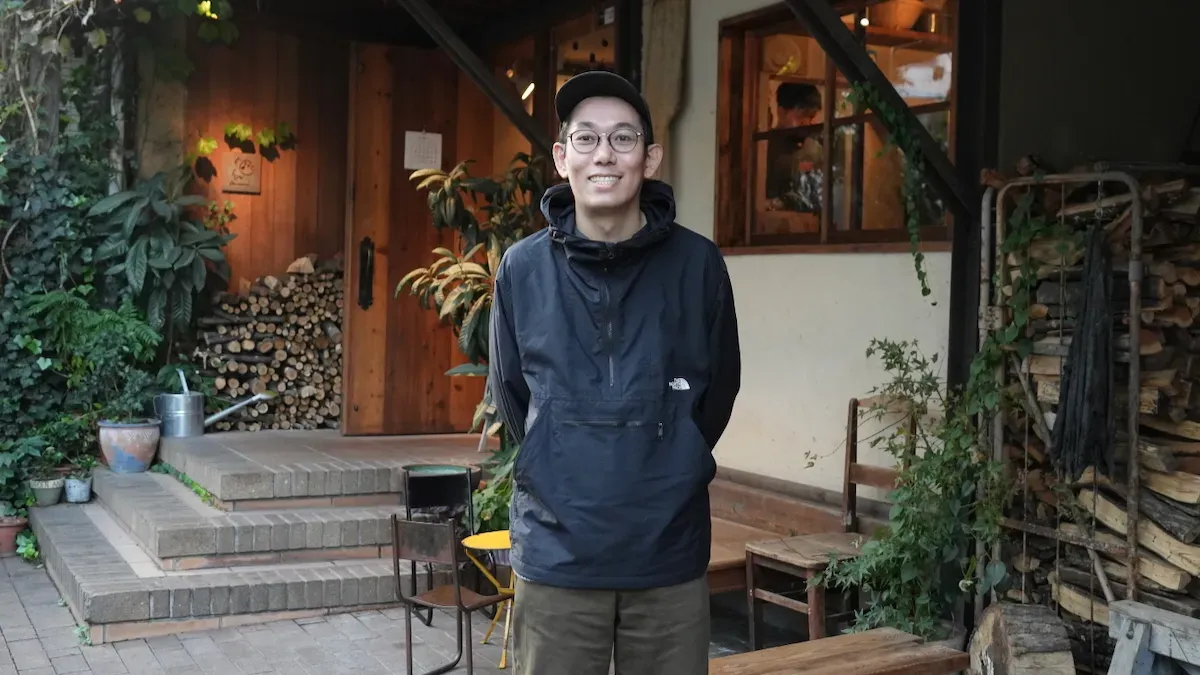
Hello. I'm Hirakawa, a writer living in a nearly 100-year-old traditional Japanese house deep in the mountains of Kanagawa Prefecture. It's been a long time since I've been in charge of an article for a magazine. I'll be appearing here and there from now on, so I hope you'll all keep an eye out for me.
This is also the first in a while since the last update of "Freedom and Responsibility." We introduce designer Taira Kawarazaki, who joined the company in 2013 and moved to Okinawa in 2021 to work fully remotely. Kawarazaki is responsible for a wide range of design work, primarily web and digital solutions. In recent years, he has tried his hand at video production, both for work and in his personal life, and has even won an award.
Even at Monosus, where working styles are relatively flexible, there aren't many employees who work fully remotely. We spoke to Kawarazaki, who works from a room in his home, about his attitude towards work and his working style, as if he is facing the challenges of "freedom and responsibility."
I thought it was a decent company.
Hirakawa You joined the company in 2013.
Kawarazaki : That's right. I was still in my 20s when I joined the company. My previous company was a design production company, but it mainly focused on print media, so I left to broaden my horizons a bit. I studied web design at a vocational training school for six months, and then joined Monosus.
Hirakawa : What made you apply to Monosus?
Kawarazaki : My previous company had fewer than 10 employees. So I wanted to work in a place with a wider range of people and broaden my horizons, so I was looking for a company with a larger staff. I think it was just by chance that I came across Monosus' job openings, but I remember thinking, "This seems like a well-run company."
Hirakawa And then he was successfully hired.
Kawarazaki I started out as a part-timer on the operations team, which operates and updates clients' websites for a set monthly fee. I was involved in design, direction, and even simple coding.
Hirakawa Were you able to work comfortably on projects other than design?
Kawarazaki: I wanted to do the work I was given well. Also, the line between direction and design is blurred, so I thought it was a job I should learn from. The operations team at the time had a team system, and I quickly became team leader and was also involved in recruitment.
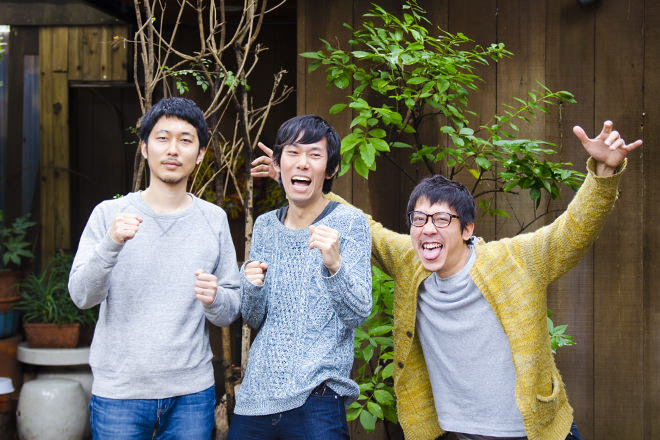
Hirakawa : When did you become an employee?
Kawarazaki I think it was about a year after I joined the company. I was on the operations team for about two years, and then I moved to the design department. There weren't many opportunities to create designs from scratch on the operations team. I thought that would make it tougher for me later on due to a lack of experience, so I told those around me that I wanted to work on creating things from scratch. Then, at a time when people were moving around, I was assigned to the design department.
Recently, I've been working on renewing B2B websites, which is one of my main jobs. I've been getting requests from clients I worked with a few years ago to work on other projects, by name, and to do another renewal for them, which makes me really happy.
The important thing is to listen carefully to what the customer has to say
Hirakawa : What do you value or keep in mind when creating good designs?
Kawarazaki : "Listen carefully to what the customer has to say." First, I research the customer's company beforehand, then I interview them. From there, I can see what the customer wants to do and what they are looking for, which helps to come up with a design concept, reveal the direction we should take, and give me hints. I then delve deeper into this through interviews and then embody it as a design.
Hirakawa The pre-design stage is what's important.
Kawarazaki : That's right. I think more than half of it is decided before you even start working on it. Of course, not everything is clear at that stage. But if you just start working on it without doing any research, you'll end up with something that doesn't have any meaning. I don't think it can be called design unless you really get to know your customers and give meaning to what you hear directly.
Hirakawa: Was there a particular moment that made you realize the importance of listening?
Kawarazaki At the time, the design department had a superior who had joined Monosas as an external partner. He was someone who really valued listening, and I learned a lot from him about the flow of design creation. In fact, once we started valuing input, we received better responses from customers.
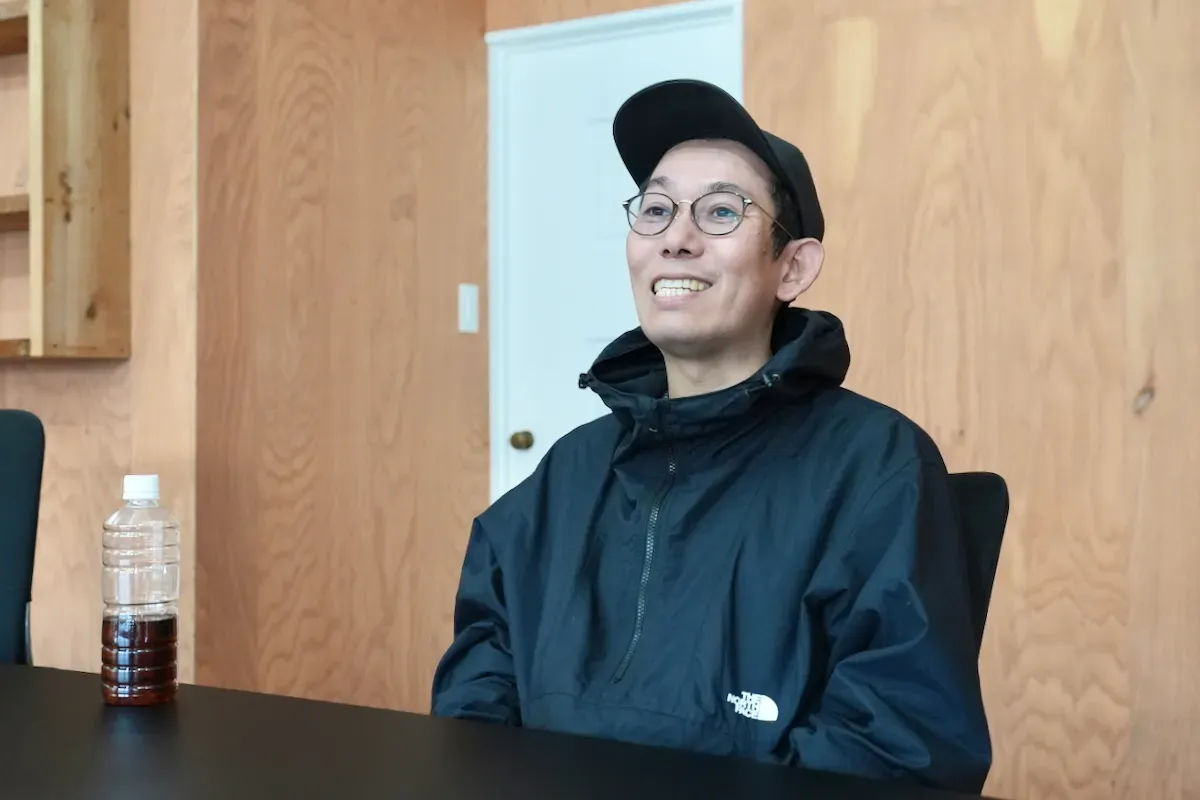
Hirakawa : I have the impression that you work calmly and steadily, and in a good way, you're a stable person with no emotional ups and downs. Is that something you do consciously?
Kawarazaki I wonder. I'm not good at emotional battles, and I want to have fun working with others. So maybe I try not to stir up emotions too much. Especially when working fully remotely, communication is only online. If it becomes difficult to do so, I feel like my value as an individual diminishes, so I try to communicate carefully. Also, only you can improve your own mood, right? Even when I'm feeling down, I try to go to bed as early as possible so I don't dwell on it.
It's been four years since I moved to Okinawa. How is life and work there?
Hirakawa: You mentioned that you 're currently working fully remotely, but you moved to Okinawa four years ago, right?
Kawarazaki : My wife was being transferred from Tokyo to Okinawa for work. I was surprised when I first heard about it, but I thought it would be nice to live in Okinawa at least once in my life, so I decided to go with her. That was in August 2021. It was right at the time of the COVID-19 pandemic, and working remotely was becoming the norm. It might have been impossible before then, but online meetings had become the default, and I was able to work remotely without any problems, so my company gave me the OK.
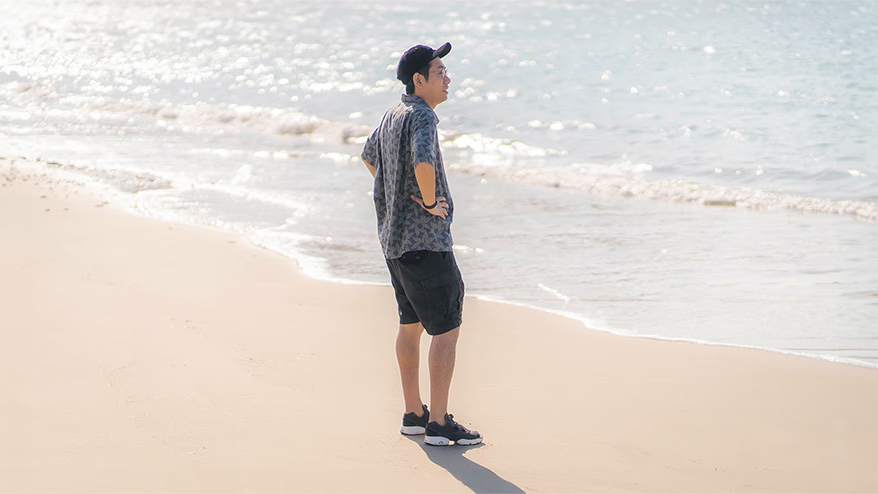
Hirakawa : How is life in Okinawa?
Kawarazaki: I'm having a great time and I'm glad I went. The ocean is nearby, so just going to see it is a great way to change your mood. Also, the humidity in Okinawa is really high. I have very sensitive skin, and when I was in Tokyo, my skin would break out at the change of seasons. But since I went to Okinawa, the humidity has meant I hardly have any skin problems. Just being free from that has made me want to stay in Okinawa forever!
Hirakawa: What's your work routine like?
Kawarazaki I start work around 9 or 9:30 on weekdays. While I know it's better to set a specific time for myself, I often end up working without deciding on a specific time. The good thing about working remotely is that I can focus solely on production outside of online meetings. Of course, I think I can do this thanks to the support of my team members.
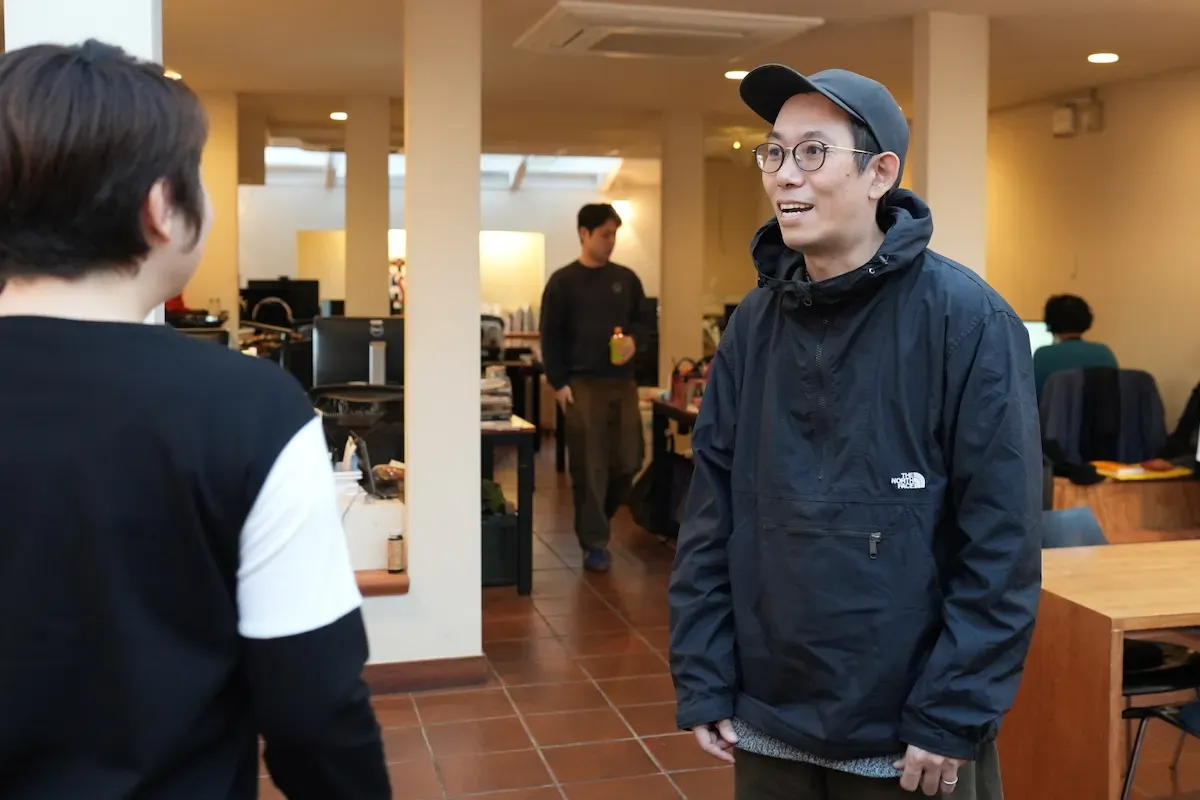
Kawarazaki If I had to say one downside, it would be that there are fewer opportunities for casual conversation. If you work in the Yoyogi office, you can talk about other things after a meeting or go out to lunch together. But with online meetings, you only talk about work and that's it, so there's no casual conversation. It's like the legend of Urashima Taro, where I have no idea what's going on in the Yoyogi office. Recently, there have been an increasing number of new employees I've never met before. It does feel lonely in that sense.
Hirakawa Does that have any impact on your creativity?
Kawarazaki I think it's more of a mental issue than something that affects my creativity. Since I feel that way, I think I should take action myself... Right now, I only come to Tokyo about four times a year, so I think I could increase that number a bit.
Video production, which started as a hobby, gradually became a job
Hirakawa I'd also like to hear about the video production you've been working on recently. This is separate from your work for Monosas, right?
Kawarazaki : That's right. It started as a complete hobby. I've always loved watching movies and music videos, and I was interested in video production. When drones first started to become popular about six years ago, I looked up the price and found they weren't as expensive as I thought, so I bought one and started filming with it. It was so much fun. I also bought a Sony camera, edited my own videos, and uploaded them to YouTube, and I became completely hooked.
Hirakawa: Do you currently produce videos for work?
Kawarazaki: Personally, I mostly create videos when my friends ask me to, so I don't have many opportunities to create videos as part of my work for Monosus. However, in terms of Monosus-related work, I've made videos for the Shiomi Bakery , the sports day we hold every year as part of our anniversary event, and I've also made a video piece with Baba-san, whose hobby is making marionettes.
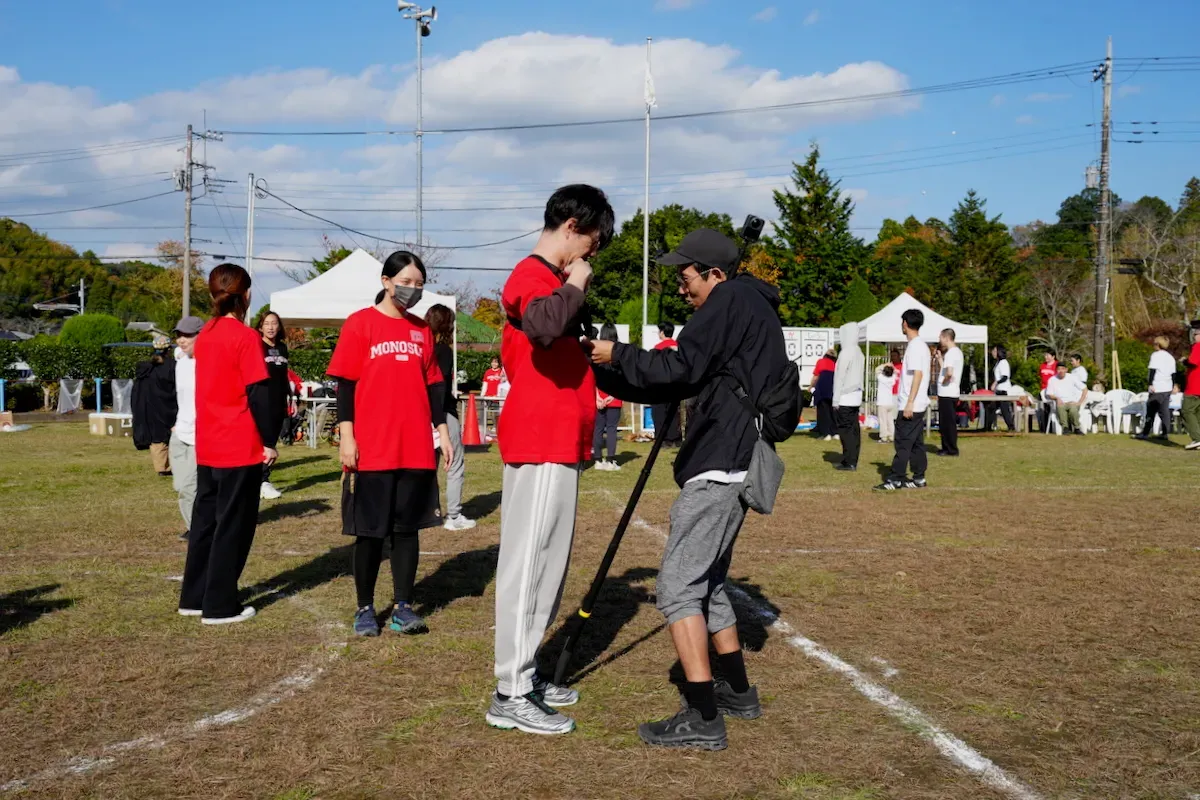
Kawarazaki: When I upload videos like that to YouTube, I sometimes get contacted from unexpected places. For example, a camera manufacturer asked me to lend them their new product before it was released if I would shoot some footage, or I was asked to write a report using the same new equipment for the online version of a specialized magazine for videographers.
Hirakawa You've even made your debut as a writer.
Kawarazaki I've never been good at writing. But when the Monosas website was redesigned, employees took turns posting articles every day. It was a lot of work at the time, but the writing experience I gained has been extremely useful. What's more, writing is a skill necessary for putting your thoughts into words and creating proposals, so I feel it's useful in design work as well.
Hirakawa So that's what has led to the present. Is there anything you'd like to do in the future?
Kawarazaki : I'm not the type of person who wants to do this or that. However, since I'm in Okinawa, I secretly hope to do work that I can only do because I live in Okinawa, or work that has something to do with Okinawa.
I met Kawarazaki-san in person, who had come to Tokyo for the first time in a while to take part in the Monosas Sports Day the next day. He was neither passionate nor cool, and the way he listened to what I was saying and gently responded was like a calm sea. I imagine that meetings with clients probably flow smoothly and comfortably in the same way. As the waves of conversation come and go, a "meaning" is discovered, and that meaning takes shape and reaches the shore. I believe that this calmness, along with the unwavering strength hidden within it, is what creates part of the team atmosphere, even in faraway Okinawa.

HIRAKAWA Yuki
Freelance writer. Lives in the former Fujino-cho, a village town in Kanagawa Prefecture. Currently writing about urban development, daily life, and ways of living.