
WEATHER: CLOUDY
HUMIDITY: 31%
The "Mushroom Grow Kit" is a mushroom cultivation kit sold by KINOKO SOCIAL CLUB.
While some people struggle to grow oyster mushrooms depending on the environment and circumstances, Ayumu from THE LITTLE SHOP OF FLOWERS sent us a magnificent photo of oyster mushrooms. How did you grow them? What was it like? Would you like to try log cultivation next?
We interviewed them after they had finished growing mushrooms. We'll share their story in two parts.
We're broadcasting the event as a podcast.
Spotify
Apple
Talk members:
Ayumu ( THE LITTLE SHOP OF FLOWERS )
Mayu ( KINOKO SOCIAL CLUB, Mushroom 담당)
#09-01 Ayumu tries growing oyster mushrooms and becomes hooked on mushrooms.
Mayu: Welcome to IKINOKO RADIO, and today we have a special guest. We're recording this on Thursday, April 23rd. Today we're recording this podcast at babajiji house in Yutenji. I'll introduce our guest shortly. Today's guest is Ayumu, one of our mushroom-loving friends.
Ayumu: Hi, I'm Ayumu, a fellow mushroom enthusiast. Nice to meet you.
Mayu: Shall we introduce ourselves?
Ayumu: That's right.
Mayu: Okay, I'll go first. I'm Mayu, and I'm in charge of mushrooms at KINOKO SOCIAL CLUB. I'm always listening to everyone's stories, growing mushrooms, spreading the word about mushrooms, going mushroom hunting, and doing all sorts of things. I was really looking forward to talking with Ayumu today. Nice to meet you.
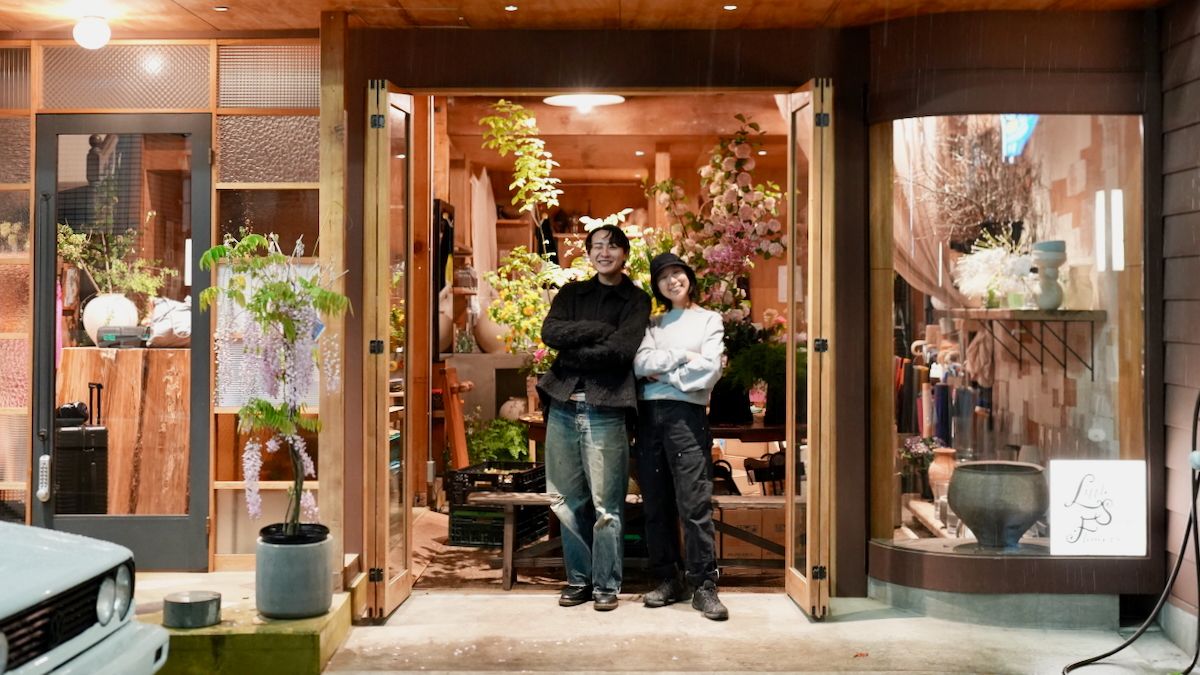
Ayumu: I've been looking forward to this. Nice to meet you. It's a bit difficult to explain, but I run a flower shop called THE LITTLE SHOP OF FLOWERS inside a building called babajiji house. I'm Ayumu. Nice to meet you.
Mayu: The moment you step inside, you're greeted with a lovely scent.
Ayumu: Really? I wonder what that scent is. It's a mix of different smells.
Mayu: There's a first floor and a second floor, and this is a two-story building, a shop facing the shopping street, but the scent is different on the first and second floors, and it smells really nice.
Ayumu: The second floor has a restaurant, so there are smells of food, and the first floor has the scent of flowers, so people really enjoy it.
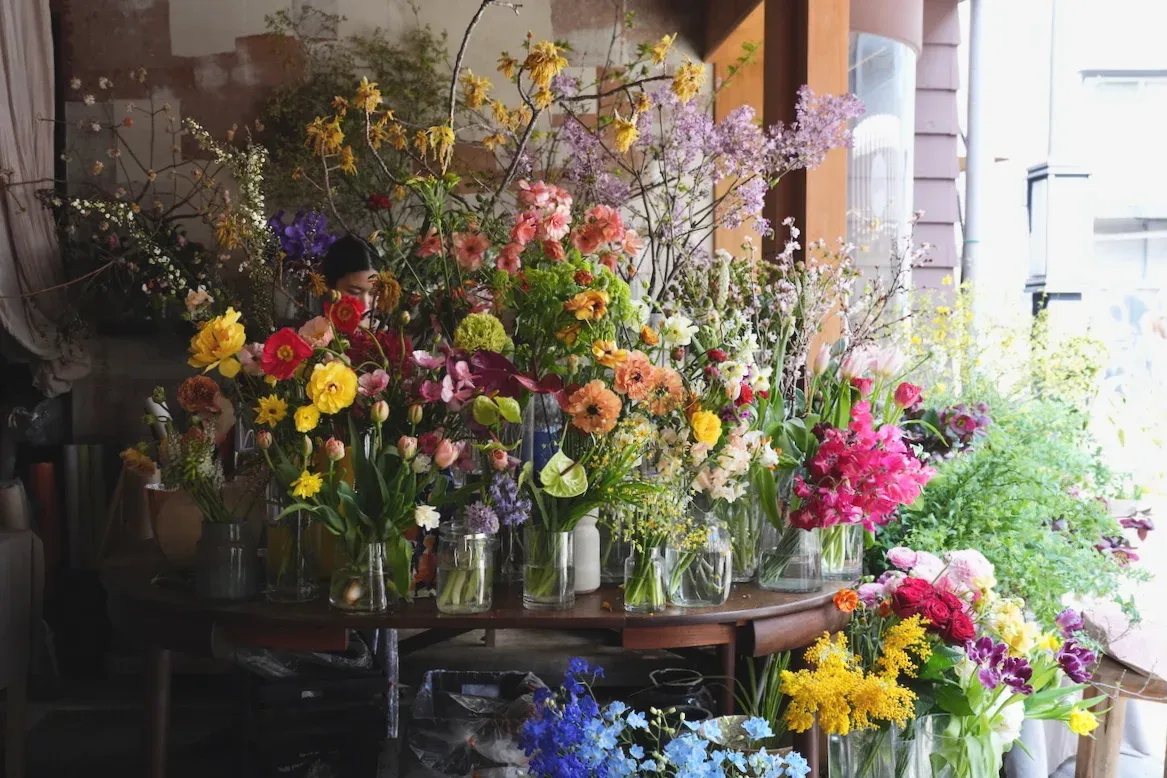
Mayu: Ayumu-kun works in such a wonderfully fragrant environment every day, but since this is his first appearance, I'd like to ask him to introduce himself.
Ayumu: Introducing myself is difficult. As a florist, the building called babajiji house itself is about two or three years old. We used to run a restaurant and a flower shop near Meiji Jingu Shrine and in Harajuku, and we moved here two years ago. Now, inside the babajiji house building, there is a restaurant called eatrip and a flower shop called THE LITTLE SHOP OF FLOWERS, and I am in charge of the flower shop.
We create bouquets and floral arrangements, cherishing the flowers that are in season and their inherent beauty. Of course, we decorate with flowers, but we also make tablecloths and clothes dyed with flowers, and create fragrances using oils extracted from plants, so we offer a wide range of floral suggestions.
Mayu: There aren't many shops like that, are there? Also, I remember when I first met Ayumu, we were taking photos at this shop.
Ayumu: I don't really do much flower arranging as a florist; I mainly work in the back office and take photos. That's basically what I do, and about once every two or three months I run something called a "photo studio." I take photos inside this flower shop.
Mayu: It was rare back then, wasn't it?
Ayumu: It's rare. It's kind of a coincidence. I do it regularly, but I don't really decide when to do it.
Mayu: The shop itself has a really cute way of displaying flowers, and they took advantage of that in the photoshoot, making good use of the flowers, and the customers were happy too, so I thought it was great.
Ayumu: Well, it's mostly families, actually. And there are a lot of little kids too, so it's a great way to document their growth, and I enjoy taking the pictures, and everyone seems happy.
Mayu: Speaking of happiness, Ayumu is always positive, cheerful, and easy to talk to. This time, when we, KINOKO SOCIAL CLUB, were given the opportunity to hold a pop-up event here, he listened intently to what we had to say about mushrooms. He told us that he loves mushrooms, and I think that's how he decided to try growing them. I'm hoping to hear a lot about that today.
Ayumu: To begin with, I still can't forget the shock I felt when I ate at KINOKO SOCIAL CLUB in Kiyosumi-Shirakawa. The burger I had back then was made with fries. It was so delicious. And the shock I felt when I drank the mash shake. Like, "Yummy!"
Mayu: I know you like plants, but I'd like to know why you came to like mushrooms.
Ayumu: The most shocking thing was the place we went to eat. They had a display there using raw logs, right? It was so stylish and beautifully decorated, and the fact that they harvested from there and used it here, I thought that was really interesting. And then when they decided to do it here, I was probably more excited than anyone else about the event. I was constantly asking questions, and I was so happy to get answers to them. And then it was actually delicious to eat, fun to look at, fun to grow, it's the best, I thought.
Mayu: Was this your first time raising something?
Ayumu: It was my first time. I thought you could only grow really big ones on logs, so I was surprised that you could grow them in such a compact size, and it was really fun to watch them grow so quickly right before my eyes.
Mayu: Do you usually enjoy raising animals like that?
Ayumu: I don't grow plants at all at home, but I find mushrooms interesting, cute, and edible. The fact that they're edible was probably a big plus for me.
Mayu: I also think that being able to "eat" it is important. You can see and experience how the things you eat every day are made, and when you see it, it sparks your interest. I think that's what's fun about this cultivation kit. On the day of the event, Ayumu asked so many questions. I answered them to the best of my ability, but I was worried about whether he was doing okay with the cultivation, so I said, "Please contact me if anything happens," but I didn't hear from him. Then I found out that he had grown them really well.
Ayumu: It's going so smoothly, I don't have any questions. It's perfect. It's growing so fast. At first, little bumps appear, right? I think they're cute. Everyone says they're gross, but I think they're cute. I water it so much every day, and it's growing so fast.
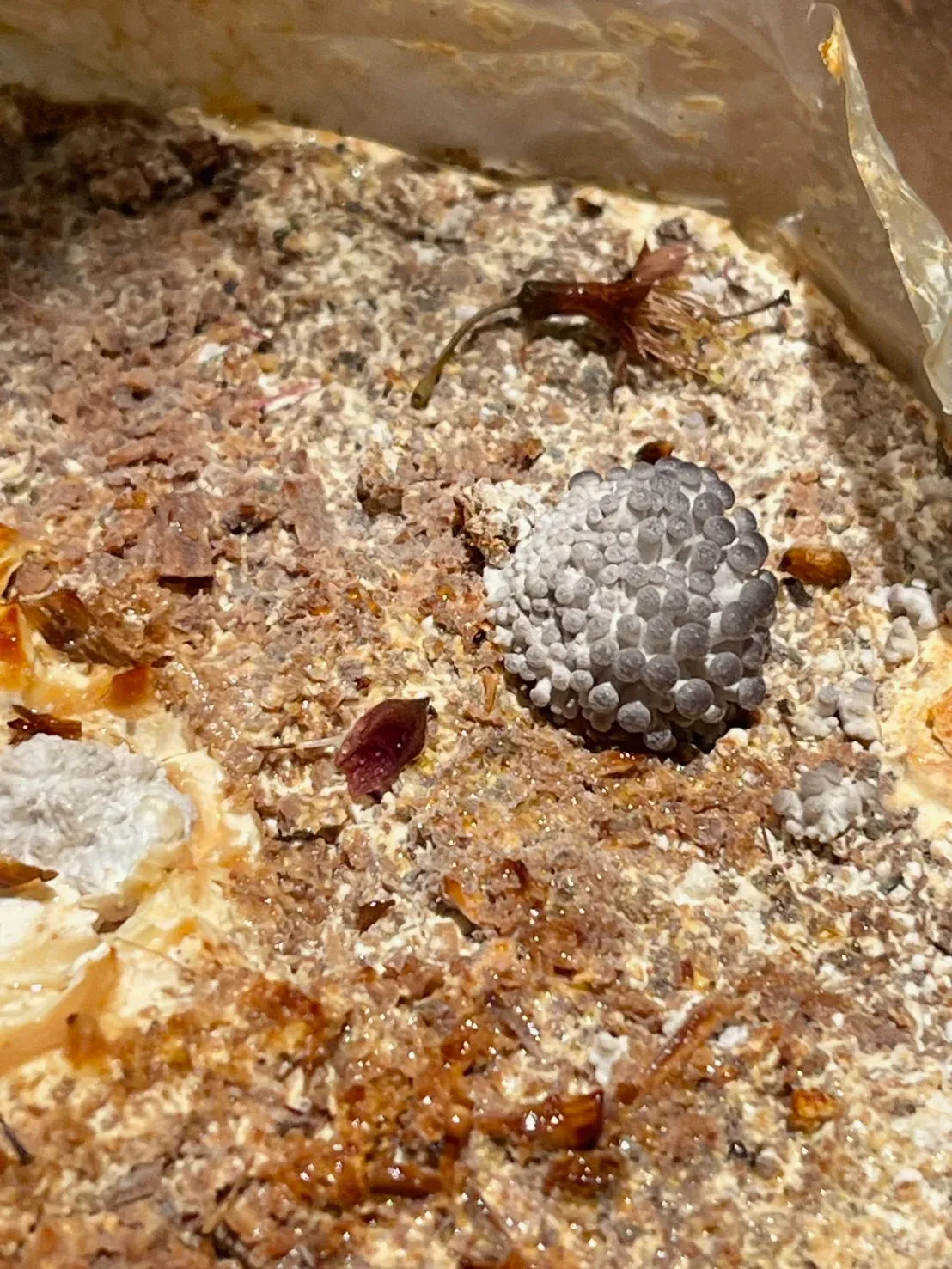
Mayu: They were growing them in this shop, right?
Ayumu: We put it down in a place where everyone walks, with a spray bottle set up, and said something like, "Take it free," and "Everyone, spray it," and everyone did spray it. This was just a coincidence, but since we're a florist, we have lots of vases around the cultivation kit, so we set up the vases. They said "humidity is important," so we made sure to fill the vases around it with lots of humidity (water). And it worked really well.
Mayu: Right now, there's a transparent vase in the center of this round table, and it's just the right size for the mushroom growing medium. There's about 3 centimeters of space all around it when you place it down, so it's a really perfect size vase.
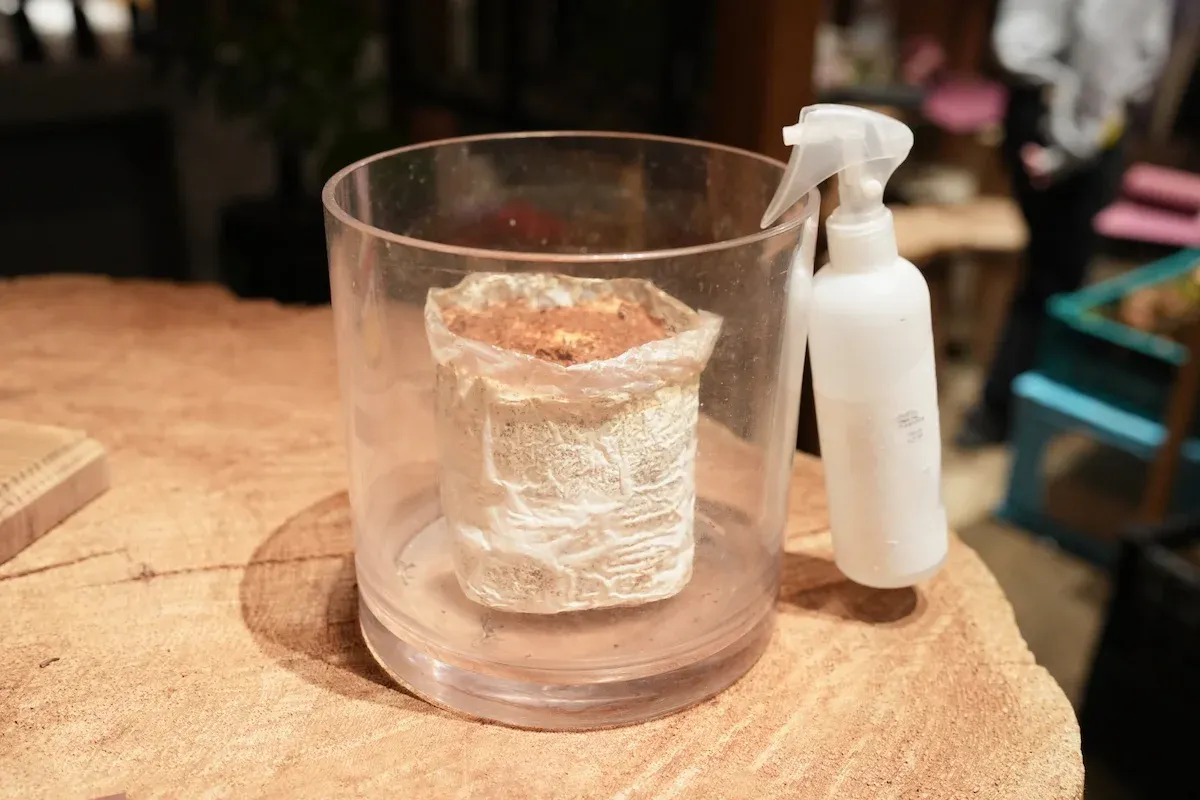
Ayumu: It's just right. The only thing I did wrong was that it grew too fast and hit a wall when I came back in the morning. It was slightly misshapen, and that's something I regret. I couldn't keep up with its growth speed.
Mayu: It's about the speed at which they grow. In nature, mushrooms grow steadily and quietly in the soil or inside trees, and then when the time comes, the mushroom, the fruiting body, the part of the mushroom that releases spores, emerges. But once that emerges, the growth is incredibly fast. It's different in the morning and in the evening.
Ayumu: That's so true. I'm at work from morning till night, and even just that makes them grow so much. I'd be like, "They were this small in the morning, but they've grown this big by night?" It was so interesting, I couldn't miss it. And when I watered them, they'd be shiny and cute, right? I enjoyed that too.
Mayu: Its cuteness reminds me of those mushrooms that absorb moisture.
Ayumu: I'm realizing now that I might have been raising it kind of like a pet. I even said I wanted to give it a name. But it's been showing up so much that I can't really give it a name.
Mayu: That's interesting. Not just one plant, but a name.
Ayumu: I tried to name each and every one of them. There were so many that I couldn't even name them all.
Mayu: I often say, "Something like a coral reef will appear."
Ayumu: I had seen the finished product, so I thought that only a few of these little bumps would grow big, but quite a few came up. I saw the photos, and they grew really well. It was fun. I want to see those photos again.
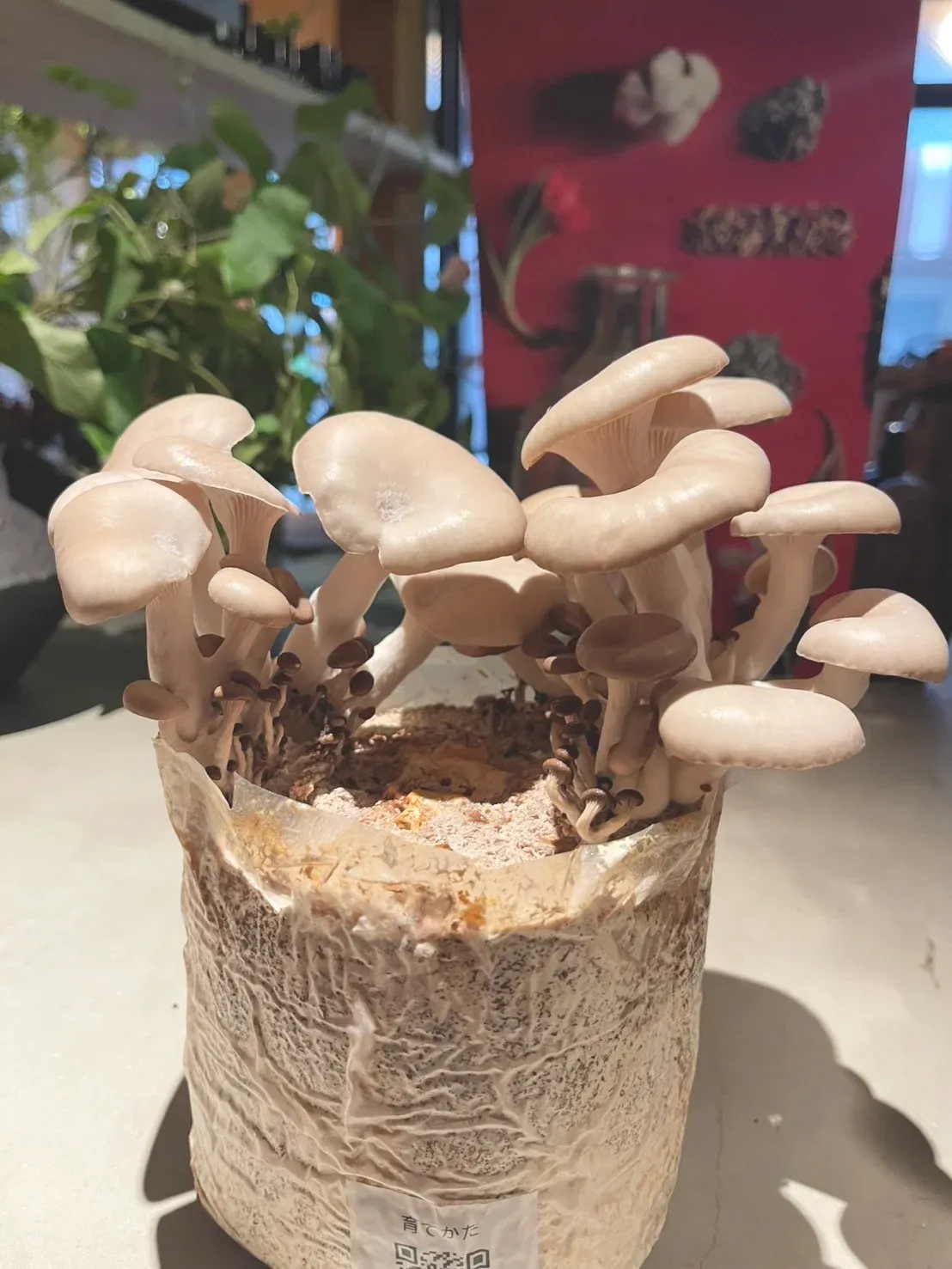
Ayumu: I've put it all together properly. I've been keeping a record of its growth. I also have videos. The colors are really nice. At first there were this many, and I gave up on naming them after there were 5 or 6. The bigger ones got the better of the smaller ones, and this is how they grew. Finally, I asked Mr. Amaike at the restaurant on the second floor to cook these, and they became pasta.
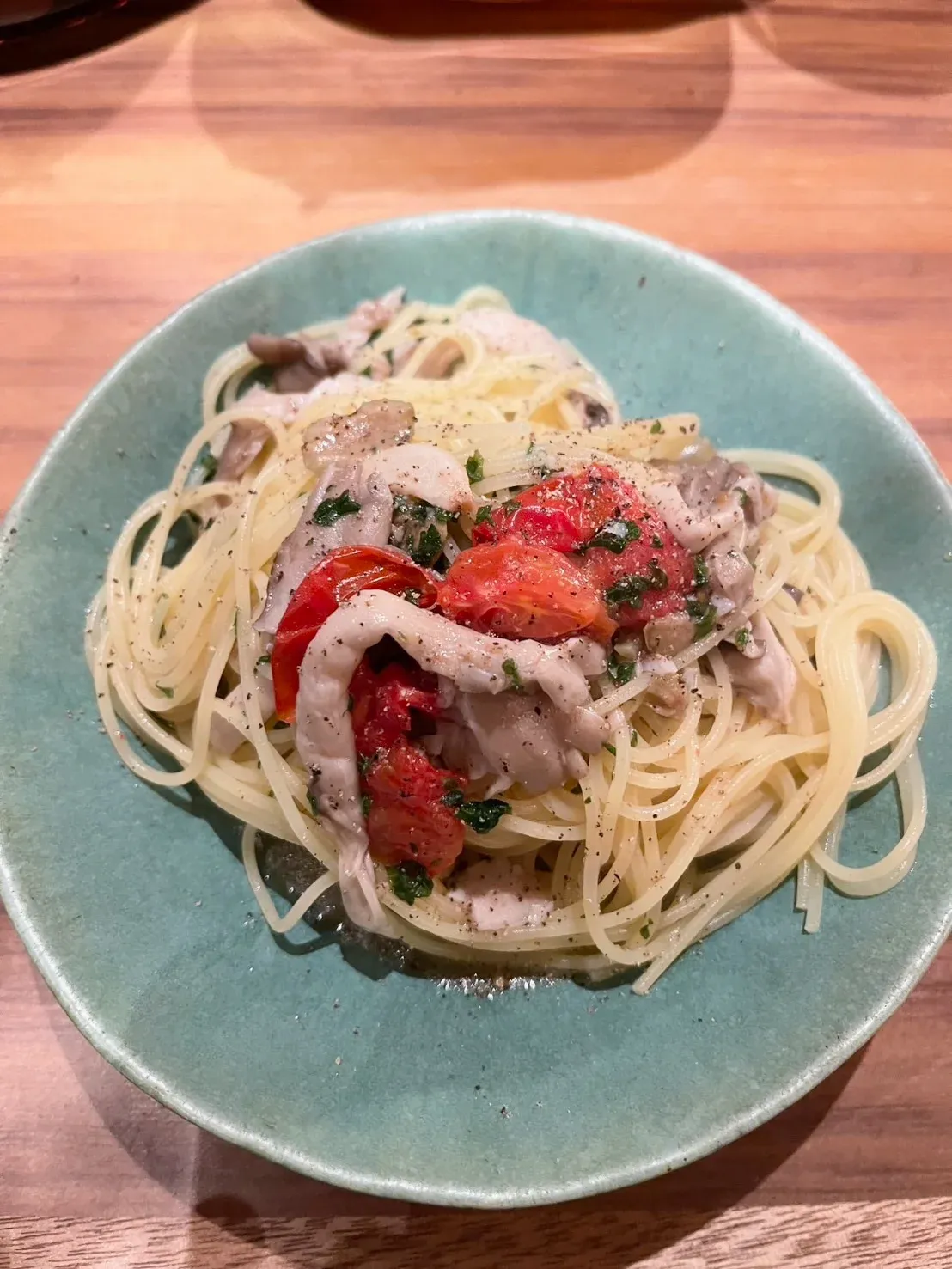
Mayu: Awesome. It looks so delicious. I wanted to ask how you ate it.
Ayumu: I brought some mushrooms, harvested them, and asked them to cook them, and they made pasta. It was so delicious that I don't remember what the mushrooms tasted like on their own, but it was really good.
Mayu: That's perfect! The most important thing is that the food tastes good. The mushrooms were just normally delicious with no strange tastes at all, and they were really tasty. Harvesting them was fun too. Were they pretty solid?
Ayumu: It was solid. I was like, "Wow, this kind of sensation exists." I also enjoyed the texture.
Mayu: I can't show it to everyone, but I'd like to share some photos in my activity log.
Ayumu: The back is beautiful, isn't it?
Mayu: The pleated part.
Ayumu: That's right. The slightly indented, flattened shape of an oyster mushroom. It turned out exactly like that. It's a typical, good shape. I was so happy and excited about it that I sent a photo. And then this radio show came on.
Mayu: We'd been saying for a while that we wanted to ask Ayumu about it. He's been so interested in it.
Ayumu: I have zero information, so I'm probably the most beginner-friendly person among those listening.
Mayu: It went so smoothly, wasn't it difficult?
Ayumu: Not at all. I raised them with love.
Mayu: I think the slightly cool, refreshing atmosphere of the flower shop might have been a good match for the growing environment of the oyster mushrooms.
Ayumu: I'm trying for the second time now. The first time went so well that I feel like I've used up all my energy and can't come up with anything.
Mayu: Judging from the photo, I think I got about 200 grams. Or maybe more? Well, I did make pasta for three people.
Ayumu: Because the three of us ate it together.
Mayu: Realistic information. Maybe even if they do grow, it'll just be tiny mushrooms sprouting one by one. Putting them in the refrigerator for about two days to stimulate them might be a good idea.
Ayumu: I'll continue to raise them. There's no blue mold either. There's been zero blue mold, and I was on alert every day, but it never appeared.
Mayu: That's good. That's what we want most.
Ayumu: I just thought I'd like to go past this and head to Haraki.
Mayu: I can teach you how to do it. I'm from Yamanashi, by the way.
Ayumu: My family runs a sushi restaurant in Yamanashi. If I could get my hands on some logs, I was wondering if I could inoculate them with mushroom spores.
Mayu: The time it takes is completely different. A mushroom bed is a mass of sawdust where the fungus has already spread, but if you try to cultivate it from scratch on a log, it takes about a year and a half.
Ayumu: One and a half years.
Mayu: The timing of the inoculation is also important. If we were to do it, the inoculation competition should be in the next autumn/winter season.
Ayumu: I'd like to do it at home. I want to just slam a log down and do it.
Mayu: Well, not just one, but maybe two. Sometimes things don't go well, so we can try that in the next project.
Mayu: When I asked Ayumu why he became a mushroom lover, I thought back on it...
Ayumu: Do you know about "Nameko Encyclopedia"? It was really popular in the very early days of smartphones. Nameko Encyclopedia. You don't know it? It was more than 10 years ago.
Mayu: What are you going to do?
Ayumu: You have to take good care of them every day. In the app. It starts with growing them. There are normal mushrooms, rare mushrooms, golden mushrooms and so on, and you collect them in a picture book. But seriously, if you don't water them, they'll wither. You'll only be able to get wrinkled ones. I think I liked that you had to take care of them every day.
Mayu: Can you still do that?
Ayumu: Yes, you can. It's free.
Mayu: I'll try downloading it on my way home. I was like, "What are they all talking about?"
Ayumu: The Nameko Encyclopedia was a huge hit. It makes a "squishy" sound when you harvest them. So cute.
Mayu: I was asking Ayumu why he became a mushroom lover, and I'd like to share the rest of that story in the second half. Please continue listening.
#09-02 Ayumu tries growing oyster mushrooms and becomes hooked on mushrooms.
Mayu: Ayumu, your family owns a sushi restaurant. What's your name?
Ayumu: It's called "Wakazushi." I don't want this to sound like an advertisement.
Mayu: That sounds great. I'd like to go.
Ayumu: It's a sushi restaurant that my grandfather started. When I was really little, he told me that the name Wakazushi (Young Sushi) came from the fact that my grandfather made it when he was young, which didn't make any sense to me. And it's still there today. My father works there as the second generation owner.
Mayu: Do you have any intention of taking over the business?
Ayumu: I feel like I have to do it because it's like a family business, but right now I like mushrooms more than sushi.
Mayu: You know, there's mushroom sushi, right?
Ayumu: Do they have mushroom sushi? Where?
Mayu: It's one type of country sushi, and in mountain villages where there's no access to seafood, they make nigiri sushi using mushrooms, wild vegetables, or other crops gathered from the mountains. I've had shiitake mushroom sushi before.
Ayumu: Oh, really? Well, let's do the next one. I'll make mushroom sushi.
Mayu: That's cool. Mushroom sushi. I also lived in Yamanashi for a little over four years, and the sushi I ate there was quite shocking. Each piece is big. And the tuna and other ingredients are coated in sauce, and they cut it in half, which I think is a unique way of eating it in Yamanashi.
Ayumu: Yamanashi really has a unique sushi culture. Apparently, Yamanashi was a transit point for fish caught in Edo Bay before they went to various destinations. They would let the fish rest in Yamanashi. And because of that, there's a really unique culture there, like putting sauce on the sushi.
Mayu: That sauce is good too.
Ayumu: It's delicious, isn't it? At our restaurant, we've really expanded on it in many ways, like changing the rice to red rice or making it easier to eat. We are a sushi restaurant that suggests various ways of eating sushi, but for now I'm not a sushi chef, I'm a florist. For now, I'm still a florist.
Mayu: I'd like to try Wakazushi sometime. I'm more interested in mushrooms than fish.
Ayumu: It's definitely a mushroom, after all.
Mayu: Are you okay? I work at a flower shop and I've grown to love mushrooms so much. Don't people worry about you?
Ayumu: I have favorite genres in all sorts of places. My home is here as a florist, but I do go to lots of places to pursue my passions. I'm going to Awaji Island tomorrow to make some fragrances.
Mayu: Oh.
Ayumu: Right now I'm working on creating a fragrance. It's similar to the fragrance I let you smell the other day, but I'd like to create incense as a new way to present things, so I'd like to go to Awaji Island.
Mayu: What ingredients will you use to create the fragrance?
Ayumu: Incense is basically made from fragrant wood, after all. If I were to suggest something as a florist, I'd like to add the scent of flowers to it and turn it into a fragrance, but apparently it's incredibly difficult to make incense out of flowers. It's a matter of how to blend it in, and conversely, it can end up smelling too sweet or too cheap, so I want to think about finding the right balance as I go along.
Mayu: That's amazing.
Ayumu: So, there are many things I like about it.
Mayu: I think it's wonderful that you're turning your passions into tangible forms.
Ayumu: It's not just about enjoying the flowers by looking at them, but also about enjoying them by wearing them, or by smelling them. I think we could also connect that to the fun of eating mushrooms. When we did it in Yutenji the other day, even kids we didn't know, even the little ones, came to try picking them. I thought that was a really great thing for the town.
Mayu: That makes me happy.
Ayumu: I wish they had a permanent facility so we could pick them anytime.
Mayu: People passing by ask me things like, "When is it open?" or "Is it a permanent fixture?"
Ayumu: It's great to be able to have that kind of experience, isn't it?
Mayu: It develops quite a bit from there. Then a young father comes along and says he's actually mushroom hunting in Tokyo.
Ayumu: Looking for mushrooms?
Mayu: I recently discovered that there are surprisingly many edible mushrooms in Tokyo, even in parks, and I'm really into them now.
Ayumu: I also go back to Yamanashi about once every two weeks because I love the forest. When I go into the forest, I look at all sorts of mushrooms and wonder if I can eat them. If I have knowledge about mushrooms, I can tell them whether they're edible or not. That's fun too. If there are oyster mushrooms, I can eat them, right?
Mayu: Yes, there are. But you have to be careful. Mushrooms grow right next to each other. I think the most fun part is how it changes your perspective. It gives you a reason to go into the mountains. If it's just a walk, you can just think, "Ah, this feels nice," and that's fine too, but if you add mushroom hunting as a reason, it becomes even more fun. Which mountains do you usually go to in Yamanashi?
Ayumu: Like Hokuto. I generally like Hokuto. I also like Fujiyoshida. But the plants that grow naturally differ greatly from forest to forest. The atmosphere is different too. But the place where I feel most at ease is Hokuto, and I really love the atmosphere there.
Mayu: It's cool over there, isn't it?
Ayumu: It's so cool here. I love negative ions.
Mayu: I love mushrooms too. I thought it would be best if we could grow them in Hokuto. Maybe someone in Yamanashi could do it, and we could work together in a communal way. I think the underlying idea has always been that we all watch over each other and use the mountain together, so it would be great if we could work together again. I'm looking forward to it. Is anyone around here interested in this?
Ayumu: All the members here (at the Little Shop of Flowers) bought the (cultivation kits). But none of them have actually grown them yet, and since I successfully grew them, I don't know if they've lost their confidence or something, but apparently they're still sitting in the refrigerator.
Mayu: We have to hurry or it'll get hot.
Ayumu: I'm telling you, you'll miss the season.
Mayu: Give me a push.
Ayumu: I'm like the site supervisor telling everyone, "We have to do this now." I've said that if they can't raise it, I'll take it, but it's surprisingly heavy, isn't it? They say it's too much trouble to carry, so they won't bring it.
Mayu: It weighs about the same as two plastic bottles.
Ayumu: It's surprisingly heavy. Are there any mushrooms other than oyster mushrooms that come out?
Mayu: It was Tamogi at first.
Ayumu: Tamogi?
Mayu: This is a type of yellow oyster mushroom called Tamogitake, which is a mushroom that thrives in the summer. This was the second one, and it was oyster mushrooms. So now I've changed the ingredients a bit and added some beer lees, the residue left over from making beer, and wood ear mushrooms.
Ayumu: Wood ear mushrooms are great! Is it summer already?
Mayu: It's summer.
Ayumu: I want to grow them. I love wood ear mushrooms.
Mayu: About 2.5 times this size.
Ayumu: I can totally do it. I'll really do it. Are they for sale?
Mayu: We haven't started selling them yet, but originally I intended to use them for cultivation. But I thought selling them might be a good idea too.
Ayumu: I'd totally do it. What I realized after trying mushroom farming this time is that the amount you harvest is quite large, isn't it? I don't usually cook. When someone cooks mushrooms for me, they shrink quite a bit, so there were times when I was like, "Oh, this is all I can eat." That discovery was interesting too.
Mayu: Mushrooms are basically made of water, so they tend to shrink when cooked, especially those grown on substrate. Do you want to grow wood ear mushrooms?
Ayumu: I really want to raise one.
Mayu: The way you cultivate them is completely different from oyster mushrooms. You have to soak them in water.
Ayumu: I'm a pro at raising the water level.
Mayu: It's the kind of mushroom I'd like to grow in the bathtub.
Ayumu: I think I'll do it at home then.
Mayu: You can harvest them slowly over about three months.
Ayumu: You can harvest that much? Are you mixing it with beer lees?
Mayu: That's right. The way you grow them is different, so I'd really like you to try that too.
Ayumu: I'd love to do it.
Mayu: So you're an ambassador.
Ayumu: I'll call myself a mushroom ambassador.
Mayu: I think mushrooms are all about love. If I were to define what love means, I think it means observing things carefully.
Ayumu: I watched it a lot, you know.
Mayu: That's the first important step in everything, to observe carefully and catch the changes. When you think, "Oh, maybe this isn't quite right," you can adjust your course, or if it's working well, you can continue with it. You catch things that you wouldn't know unless you were observing, and you find enjoyment in observing. I think observing is what love is all about. Even in mushroom cultivation. So I think you did a great job with that. I want to give you a medal.
Ayumu: On the contrary, thank you. I want to give you a certificate of appreciation for making it.
Mayu: Is that okay? I made this myself.
Ayumu: Are you actually making these by doing this? Are you packing them one by one?
Mayu: It's really handmade. The raw materials are sawdust, coffee grounds, a little bit of wheat bran and rice bran, and water. They mix it all by hand and then put it in bags. That's done by hand too. After that, they put it in a sterilization kettle to sterilize it, then it's taken to a sterile room where bacteria are inoculated, and then it's cultured for about a month. Even the inoculation of bacteria after the culture was done by hand, so it's almost entirely handmade.
Ayumu: So that's the process involved in making it by hand? That must be difficult.
Mayu: In normal mushroom substrate preparation, some parts are automated, and there's a machine that mixes sawdust in a large blender and then bags it up, and that's how the process goes.
Ayumu: I honestly think this is a kit that people of all ages can enjoy. I think little kids will be really happy with it.
Mayu: Of course, even young children can water plants and do it together with their mothers, fathers, or other family members, and observe the plants.
Ayumu: When you look at the KINOKO SOCIAL CLUB's Instagram, there are so many beautiful photos of mushrooms, right? Growth has an artistic quality to it, and that's what I was aiming for. But then they started popping up from all sorts of places and it got out of control.
Mayu: There's a process called bud thinning, where you reduce the number of buds at the beginning. That way, each one grows bigger and more beautifully. I also think humidity is important. Light also affects the color of the cap. It might make the wood ear mushrooms brighter too.
Ayumu: Do wood ear mushrooms need sunlight anyway?
Mayu: Mushrooms basically need indirect light, and not even direct sunlight.
Ayumu: It was good that I grew up in this environment.
Mayu: I think it's really good.
Ayumu: There's hot water here, so maybe I should grow it here after all.
Mayu: Great, let everyone see it.
Ayumu: It's fun to show everyone, like it's my own child. I can say, "Look how much my child has grown!" Everyone is really surprised by how fast it's growing. They say "Wow!" every morning. I really enjoyed their reactions.
Mayu: It's like my own treasure now.
Ayumu: That's right, it's my child, do you want to eat it? And I said yes.
Mayu: That's great, it creates opportunities for communication and for everyone to gather around a meal.
Ayumu: The active aspects of the KINOKO SOCIAL CLUB, like how everyone connects through mushrooms. That's the best, isn't it?
Mayu: Do you want to go to the observation event?
Ayumu: Huh? Mushrooms? In the mountains? I'll go!
Mayu: I'd like to do it in the mountains, or in suburban parks, or in rural parks. Also, Yamanashi has a lot of great places. I have friends there, so maybe we could go together.
Ayumu: Awesome.
Mayu: Like people who are incredibly knowledgeable about birds. I always get to go into the mountains with people like that, and we get to see mushrooms, birds, and all sorts of other things. When we go towards Mt. Fuji, the types of mushrooms that grow differ depending on the area. That's really fun too.
Ayumu: I've been calling Mayu-san "Sensei" (teacher) without her permission. It's fun meeting all sorts of teachers.
Mayu: I have amazing teachers around me. I'm not at all.
Ayumu: I do have a flower arrangement teacher, and it's interesting to listen to what teachers like that have to say. They all have different perspectives. It's also fun to interact with people like that and think about what I really like.
Mayu: I really feel the same way. I love listening to people who have something they're good at, following them, and learning from them. So it's fun when there are people from all sorts of fields.
Ayumu: There are so many people who are like, "What a weirdo!" But they're also incredibly cool. It's so much fun. Their energy alone is enough to satisfy us, but it's so enjoyable to watch. The passion they have when they talk.
Mayu: But you can become like that too.
Ayumu: I also want to have that in various genres. I probably won't be able to become a professional, but I think it's more fun to have a lot of different skills and techniques.
Mayu: It's a way to connect with people, and it can be a powerful tool, right? Thank you for sharing so many stories with me today. See you next time!
Ayumu: Well, see you later.
NAKAJIMA Kimi
Freelance, living in Ryukazaki, Ibaraki. I first encountered Monosus through an interview with “Nihon Shigoto Hyakka” and am now involved in several things, a bit outside of Monosus.