
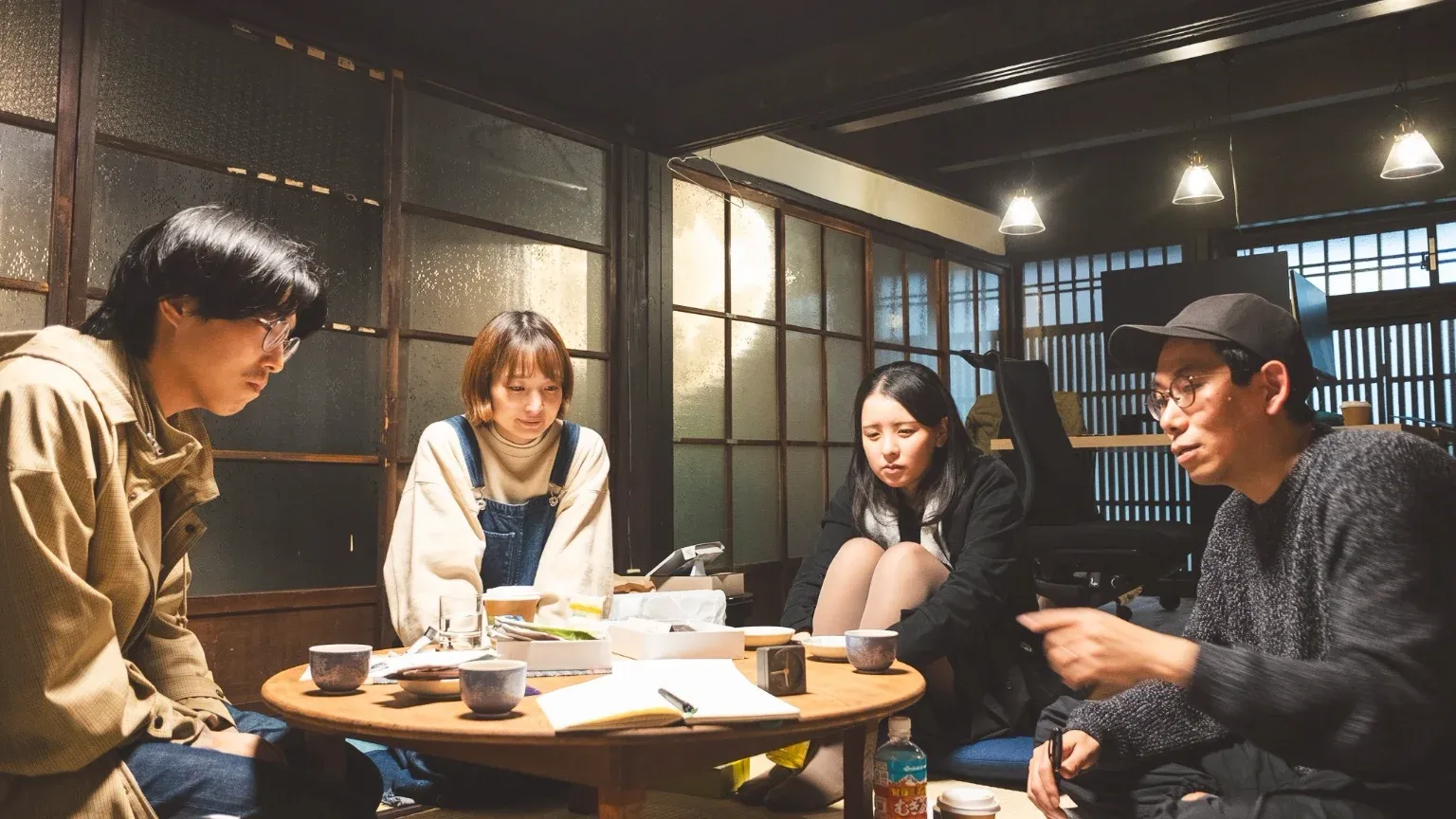
In early April, we quietly held a workshop at our Kyoto office.
The workshop theme is "Revisiting Your Portfolio."
The participants were the three members of the Baba Unit * , Baba, Yano, and Kawarasaki, along with the facilitators, Katsumata and Fukuzaki.
*Unit: The purpose of this system is to achieve growth in "business," "individuals," and "organization" by exploring good teams. Monosus's organization is composed of units of 7 people or less. Units are formed with respect to the will of each individual, and the composition is reviewed once a year.
The reason for holding the event
The Baba Unit was a unit that, from the very beginning, didn't have many opportunities to meet in person because each member lived in a different location.
Therefore, if we had the opportunity to get together, I wanted to create a time not just to work together, but also to get to know each other better.
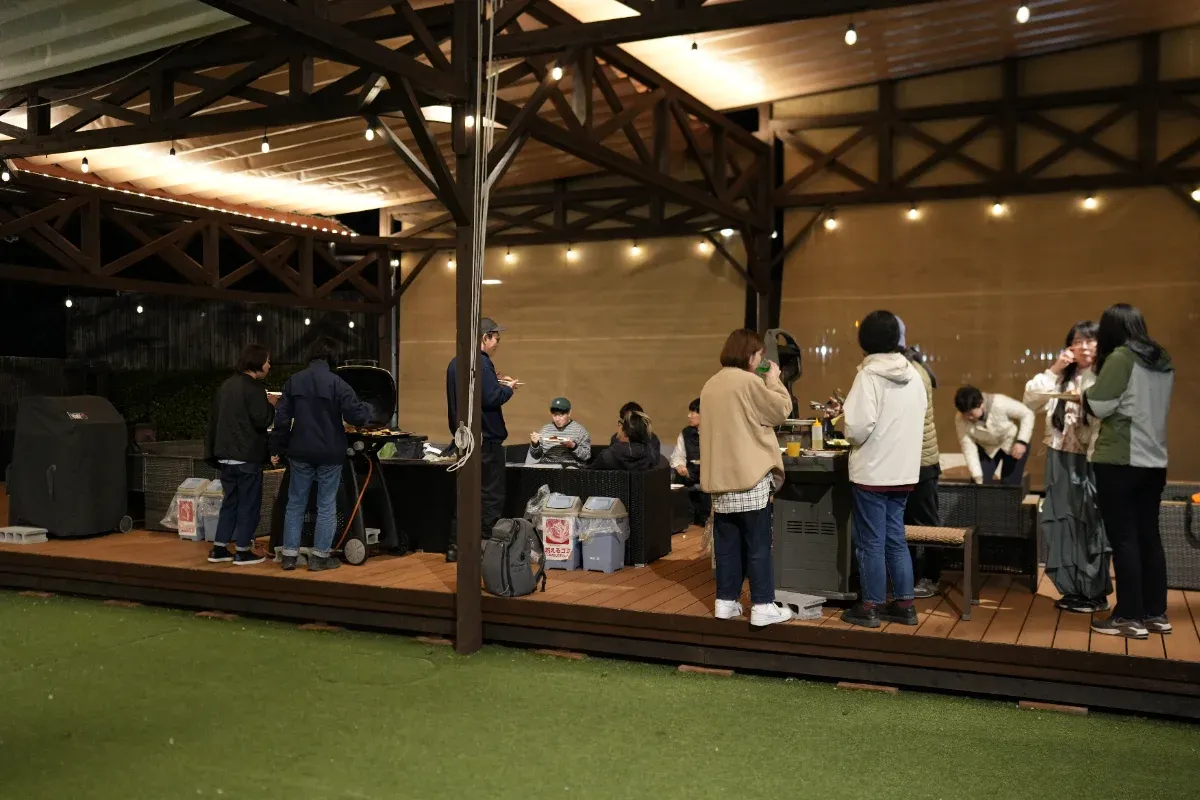
At that time, Sugano-san from the Kyoto office organized a cherry blossom viewing party, and we all ended up gathering in Kyoto. Since it was such a great opportunity, we also decided to hold a workshop for the Baba Unit.
About the Facilitator System
Monosus has a "facilitator system."
This system allows for the participation of an external facilitator, acting as a third party to help manage meetings effectively or provide one-on-one consultation.
This time, we used this system to ask Mr. Katsumata to conduct a workshop.
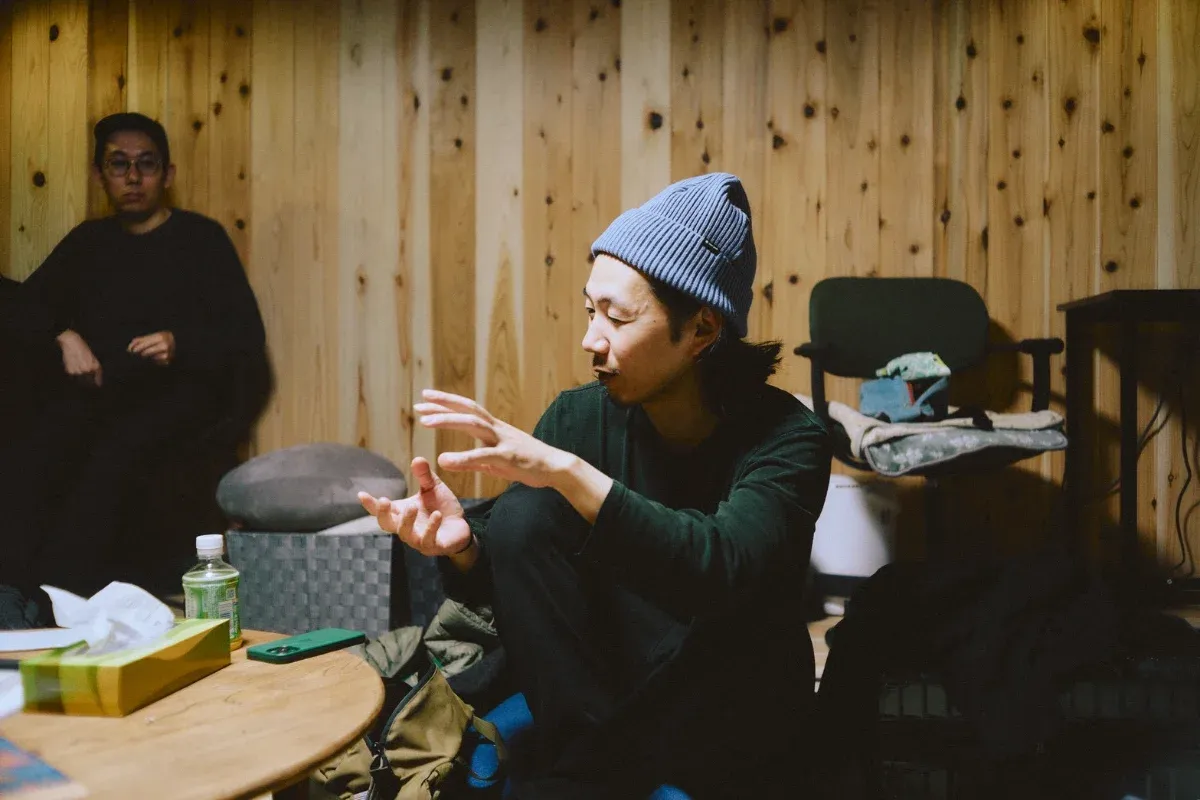
Ms. Katsumata is a graduate of Monosus and has now founded a company called Ba Co., Ltd. , where she works on creating spaces such as team building and workshops.
I had met all the members of the Baba unit and had a relationship with them that allowed me to talk to them with confidence, which is why I asked them to participate this time.
Re-editing my portfolio
The Baba Unit made the following requests regarding what they wanted to do on the day:
- I want to talk and listen carefully.
- I want this to be a time when we can learn about each other's perspectives.
Then Ms. Katsumata said, "I'm actually planning a workshop with a friend on the theme of 'revising your portfolio,' so this might be perfect timing."
When we talk about portfolios, generally speaking,
- What kind of track record do you have?
- What can be done?
- What kind of results did you achieve?
It's often seen as a way to summarize what you've done in order to get others to choose you.
On the other hand, the portfolios used in the workshop are not so much about organizing achievements and results,
- What do I consider important (subjective)?
- What has moved you emotionally? (What touched you)
- When were you able to be your natural self (state of being)?
This was a way of re-evaluating my own activities based on these criteria.
Mr. Katsumata suggested, "It's not fully systematized yet, but would you like to give it a try?" and I replied, "I'd love to."
On the day
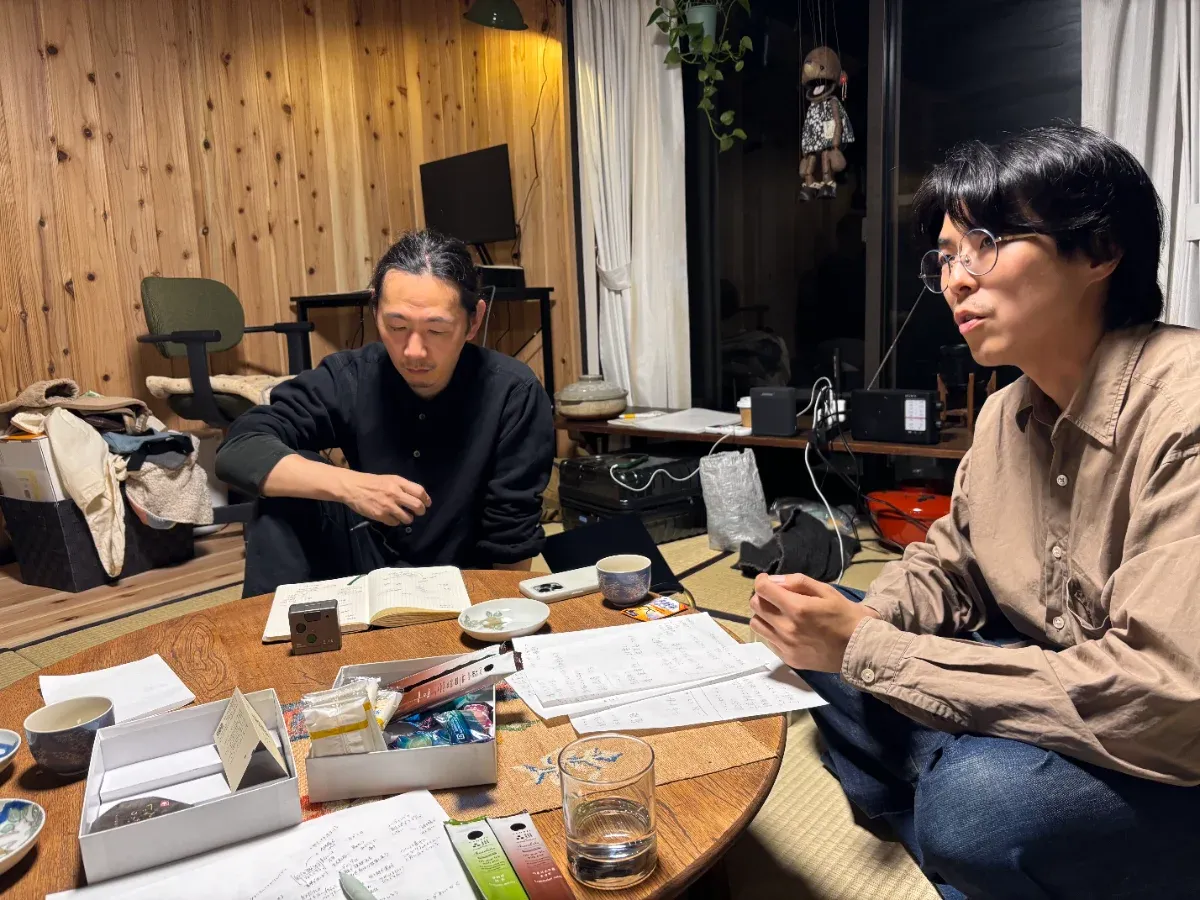
Initially, the plan was to have the workshop interspersed with short outings, but unfortunately, it rained. Instead of going out, we decided to dedicate time to the workshop in the office.
Initially, the plan was for only Mr. Katsumata to be the facilitator, but Mr. Fukuzaki, who is also a co-organizer, was able to join us , so the workshop will now be conducted with both of them and everyone from the Baba Unit.
* Co-representative of Shoyo Gakuha LLC (operates the residential facility space Mimimimi in Miyoshi City, Hiroshima Prefecture)
Mind Mapping Workshop
After Ms. Katsumata and Ms. Fukuzaki explained the background of the workshop, the workshop began immediately.
■Overall flow
![Document outlining the overall flow of the workshop: [Morning] Check-in & Fieldwork, 10:00 Self-introductions, check-in, brief explanation of today's program background, 11:00 Walk along Kamo River & stone collecting workshop, 12:00 Lunch & visit to Shimogamo Shrine. [Afternoon] Reorganizing your portfolio, 14:00 Mind map workshop (60 min), 15:00 Sharing insights (30 min), 15:30 Time to choose 5 things (20 min), 15:50 Finding commonalities (90 min), 17:20 Sharing and presentation (40 min), 18:00 Check-out (15 min), 18:30 Dinner](https://cms1.monosus.blog/uploads/portfolio_04_986aac88ae.webp)
First, let's do some mind mapping.
Based on five questions, I took stock of my own activities.
■Work content
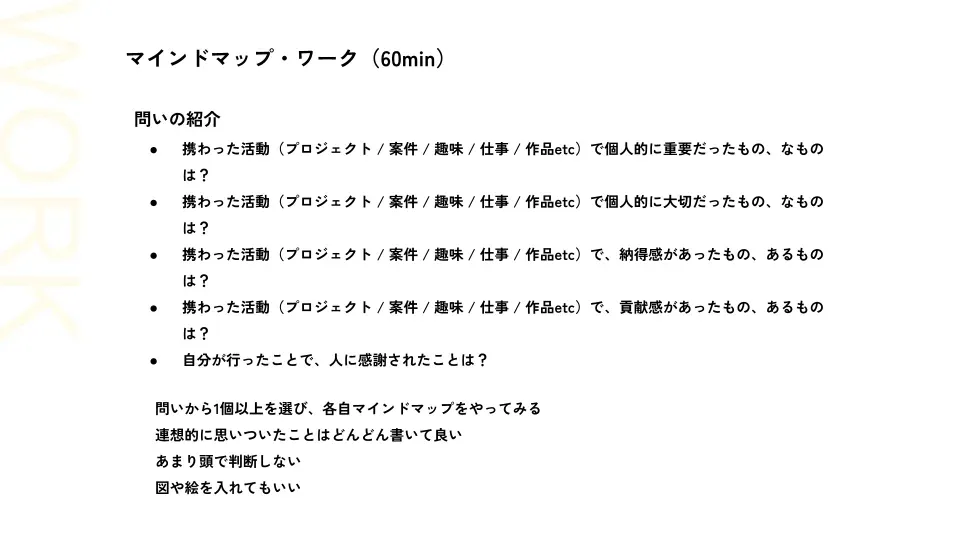
The term "activity" here doesn't have to be limited to work; it can be anything from projects, hobbies, leisure activities, experiences from student days, or things you've continued doing in your daily life.
Choose one or more questions from the five options, write them in the center of a piece of paper, and then freely expand on them like a mind map, thinking about whatever comes to mind.
Paper and pens were distributed, and for the next few hours before lunch, everyone first grappled with the questions individually.
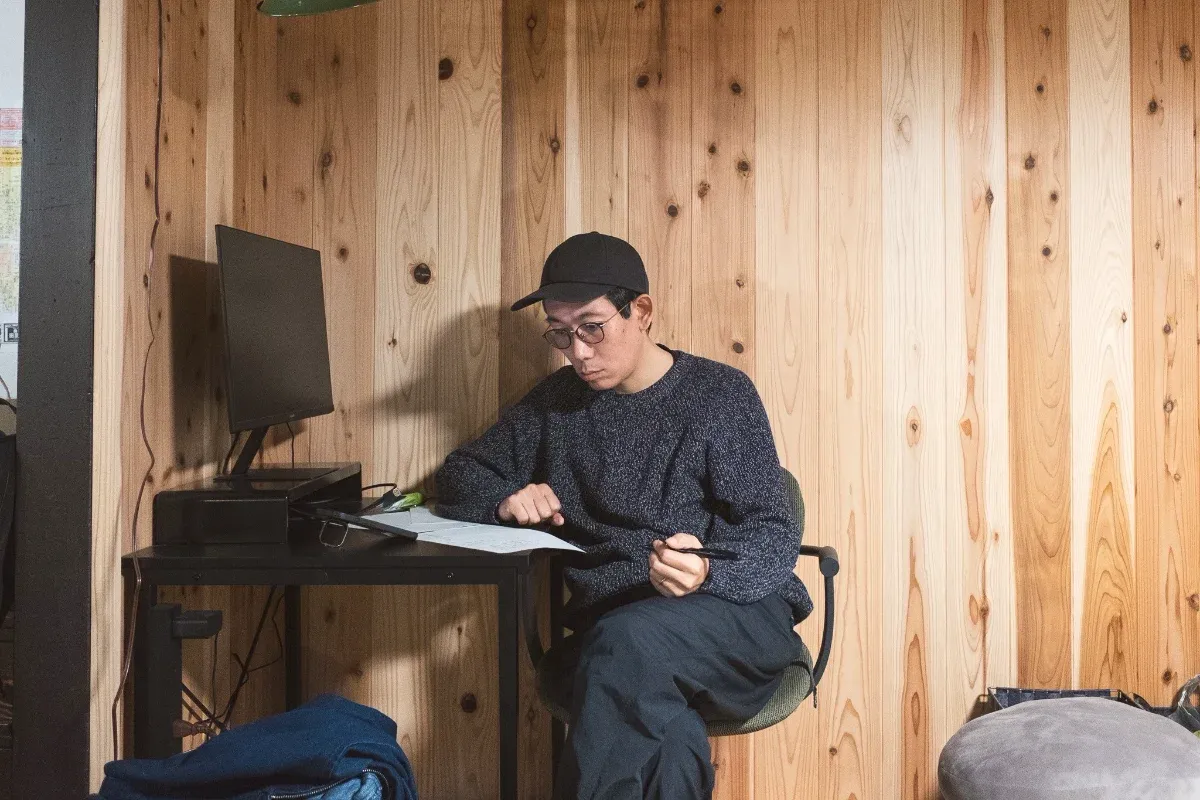
With people saying here and there that "mind maps are difficult," lunchtime arrived in no time.

We chatted while having a meal at Cafe Marble, which is near the office.
On the way back to the office, we each bought a delicious drink at 13F Coffee and returned to the office.
I'll continue with the mind mapping work.
Sharing insights
When the time came, everyone gathered around the low table at a convenient point.
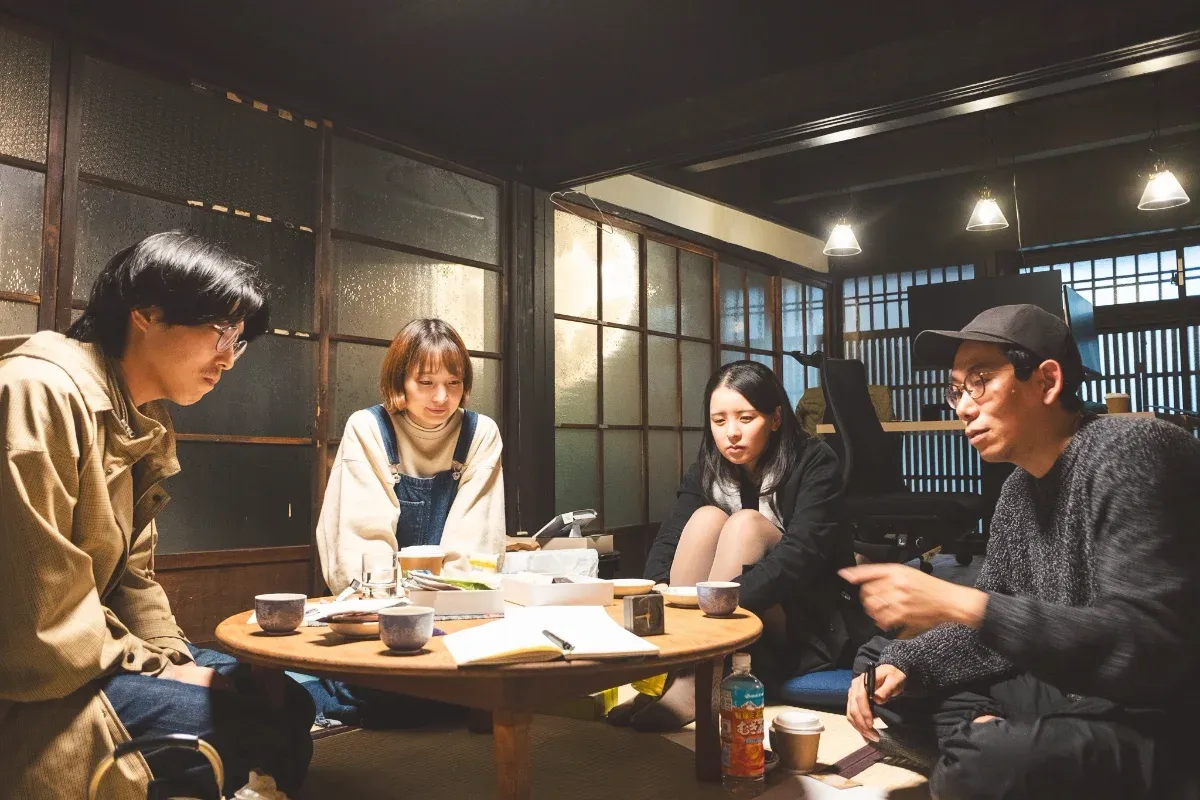
We talked about what came up and what we thought about as we went along.
At first, I was trying to figure out how things would proceed, but thanks to Ms. Fukuzaki and Ms. Katsumata's skillful questioning, the discussion gradually became more lively with questions and comments.
Baba's mind map covered a range of topics, from his creative activities in his childhood to memories with friends and family, and his work in his previous and current jobs, essentially a reflection on his life.
Among these topics, the discussion delved deeper into how people and things interact with each other, and what constitutes a comfortable environment.
Yano's mind map included stories about her extracurricular activities and lessons during her student days, her experiences at the Kamiyama Monosasu Juku workshop, insights gained from those workshops, and conversations with artists she met at craft fairs.
Among the five questions, the topic of satisfaction was particularly frequent, and we delved deeper into it by asking each other questions about when we feel satisfied and when we don't.
Kawarazaki's mind map included topics such as video production, design work and writing activities, favorite sports, and health management.
Regarding video in particular, I received many questions from those around me, and they delved into topics such as what sparked my interest in video, its commonalities with my design work, and what aspects of the process I enjoy.
By the time everyone had finished speaking, it was getting quite dark and we were all getting hungry, but we had all enjoyed the workshop so much that we decided to continue.
Five ways to choose time
Next, we did an exercise where we tried to come up with five keywords from what came up in the mind map I wrote earlier, and from what I thought after listening to everyone's stories.
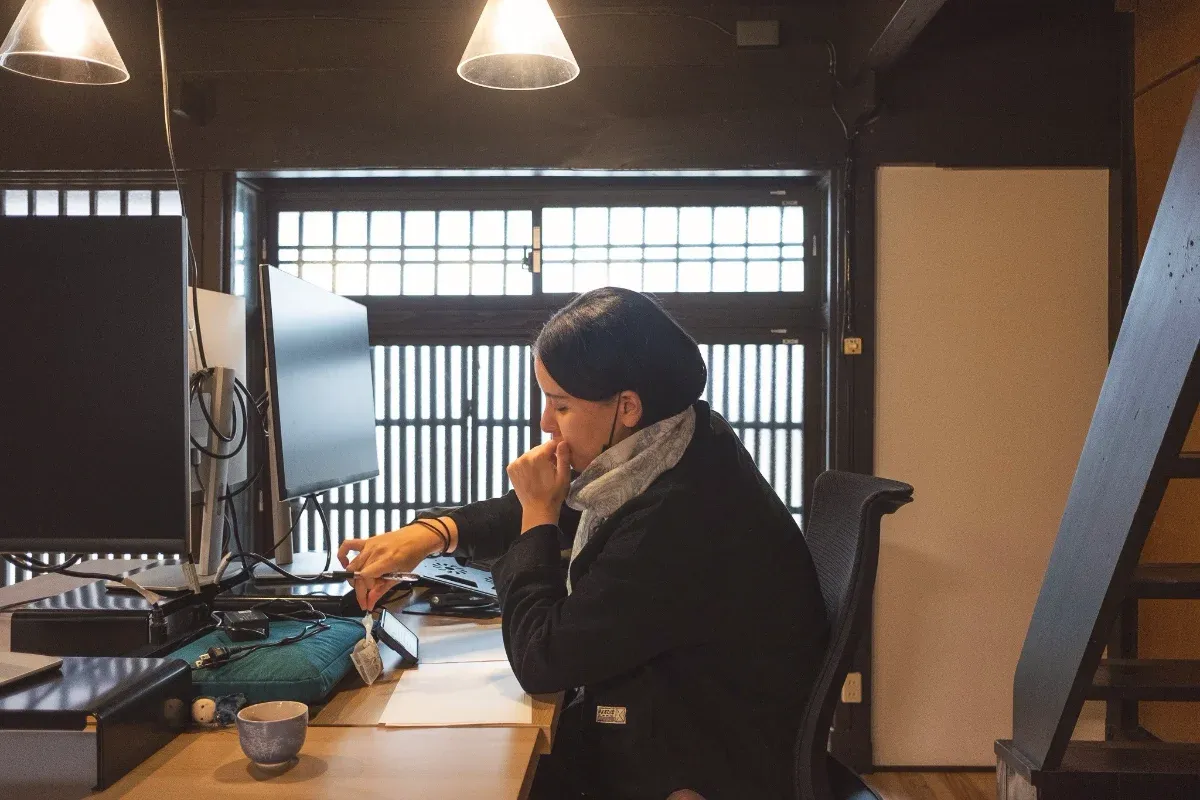
After everyone has time to think individually, we will gather again to share our thoughts.
This allowed us to see which aspects everyone considered particularly important, even more clearly than with the previous mind map.
Kawarazaki-san listed five specific activity keywords, which included things she spends a lot of time on in her life, as well as work she has been assigned by name.
Ms. Yano listed five words that describe the conditions and values she seeks in her work and activities.
We talked for quite a long time, discussing deep topics such as what we find enjoyable and what unique skills we can offer.
Baba listed five words that represent feelings or states that he values in his daily life.
Each person's choice of words was completely different in terms of level of detail and perspective, and I felt that their individuality was reflected in the five words they selected.
Finally, we shared our impressions with each other, and the workshop concluded.
Looking back
We also asked participants Kawarasaki-san and Yano-san about their current feelings reflecting on this workshop.
Kawarasaki-san
First of all, I had never been to the Kyoto office before, so I was glad to be able to visit at this time.
Regarding the workshop, I think it was a good opportunity to reflect on my life by taking the time to reconsider what I've valued so far, in the form of a portfolio. I believe this inventory will make it easier to make choices about what to keep and what to discard in my life going forward.
I also felt that I was able to get to know the other unit members on a deeper level than before.
Yano-san
By putting my experiences and feelings into writing and speaking them aloud to the participants, I felt like I was able to skip several steps in my thought process that would have taken me a long time to complete on my own.
What was particularly striking was how my thoughts, which I thought I had organized simply by writing them down, gradually changed shape as I spoke them aloud, received various questions and opinions, realized that my assumptions might be wrong, and reconsidered them from perspectives I hadn't considered before.
I was able to spend time in a calm atmosphere and gain many insights.
summary
Through this experience, I was reminded once again that "understanding others and understanding oneself" is not something that can be done easily.
Throughout the workshop, I remember constantly thinking, "What lies beyond those words?" as I listened to the discussion.
We held this workshop to get to know each other better, but the mystery only deepened. However, I realized once again that this is what makes it so interesting.
Even if I were to create a portfolio based on the five keywords I came up with and say, "This is my portfolio!", it probably still wouldn't feel quite right. I think that only in that fleeting moment when it finally feels right, after much trial and error, can I truly feel like myself. If that's how it is even with myself, then understanding others is bound to be difficult.
However, I feel that this workshop has strengthened the sense of trust and security within the unit. It's truly wonderful to have a space within the company where you can be yourself, and I hope we can continue to expand such spaces in the future.
BABA Haruka