

Nice to meet you. I'm Enna, a freelance writer.
I usually live in Nagano, but I was invited by Nozomi Nakajima, who helped me out during my internship during university, to visit Monosus' Yoyogi office.
The Monosus employees have been searching for a working environment that suits them, making adjustments and holding discussions to gradually shape the company.
One of Monosus's autonomous initiatives is a system called "Yorai," which was established in response to the formulation of rules for coming to work. Since then, Yorai has been working on renovating the main conference room and considering the introduction of a free address system.
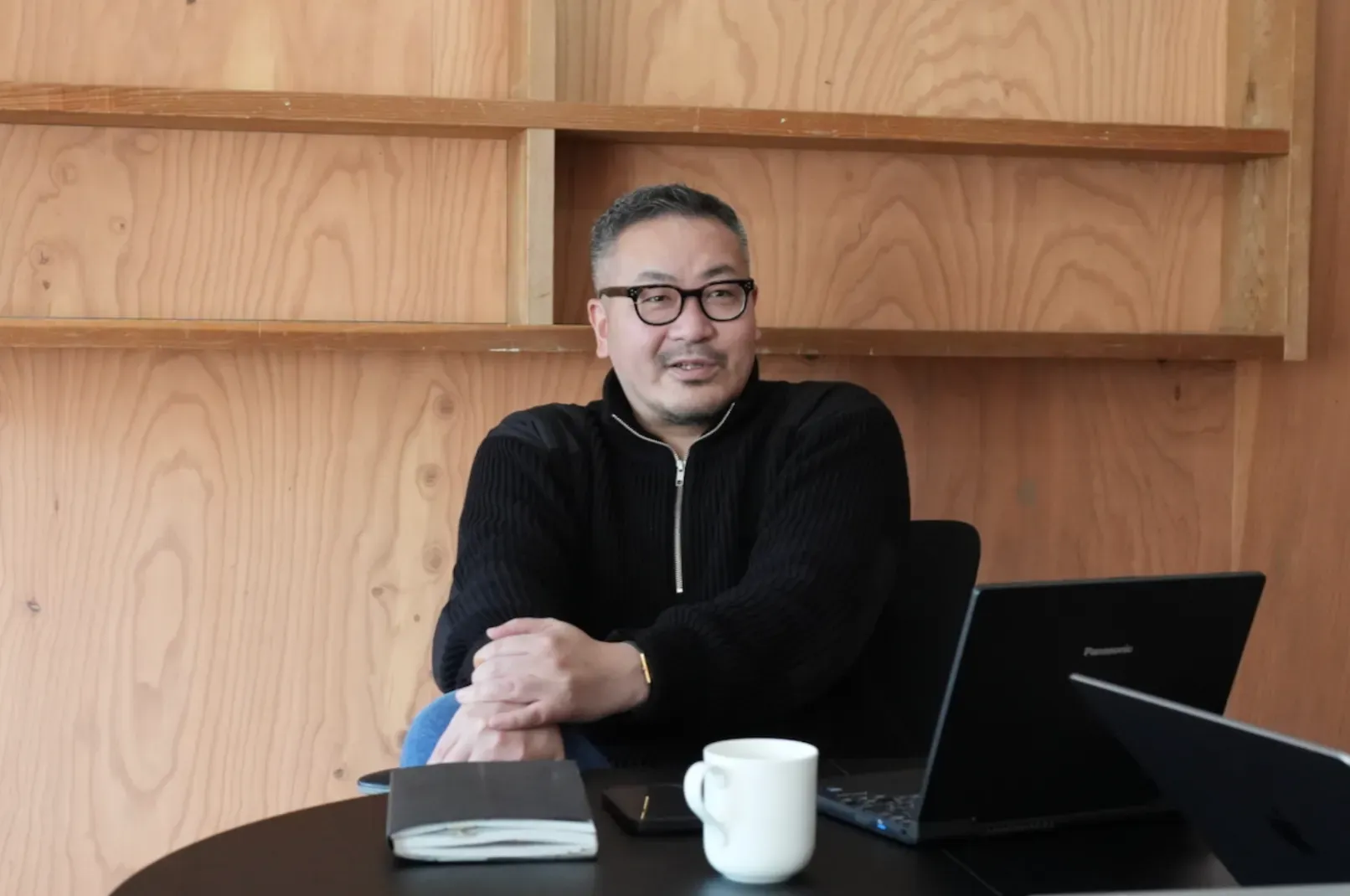
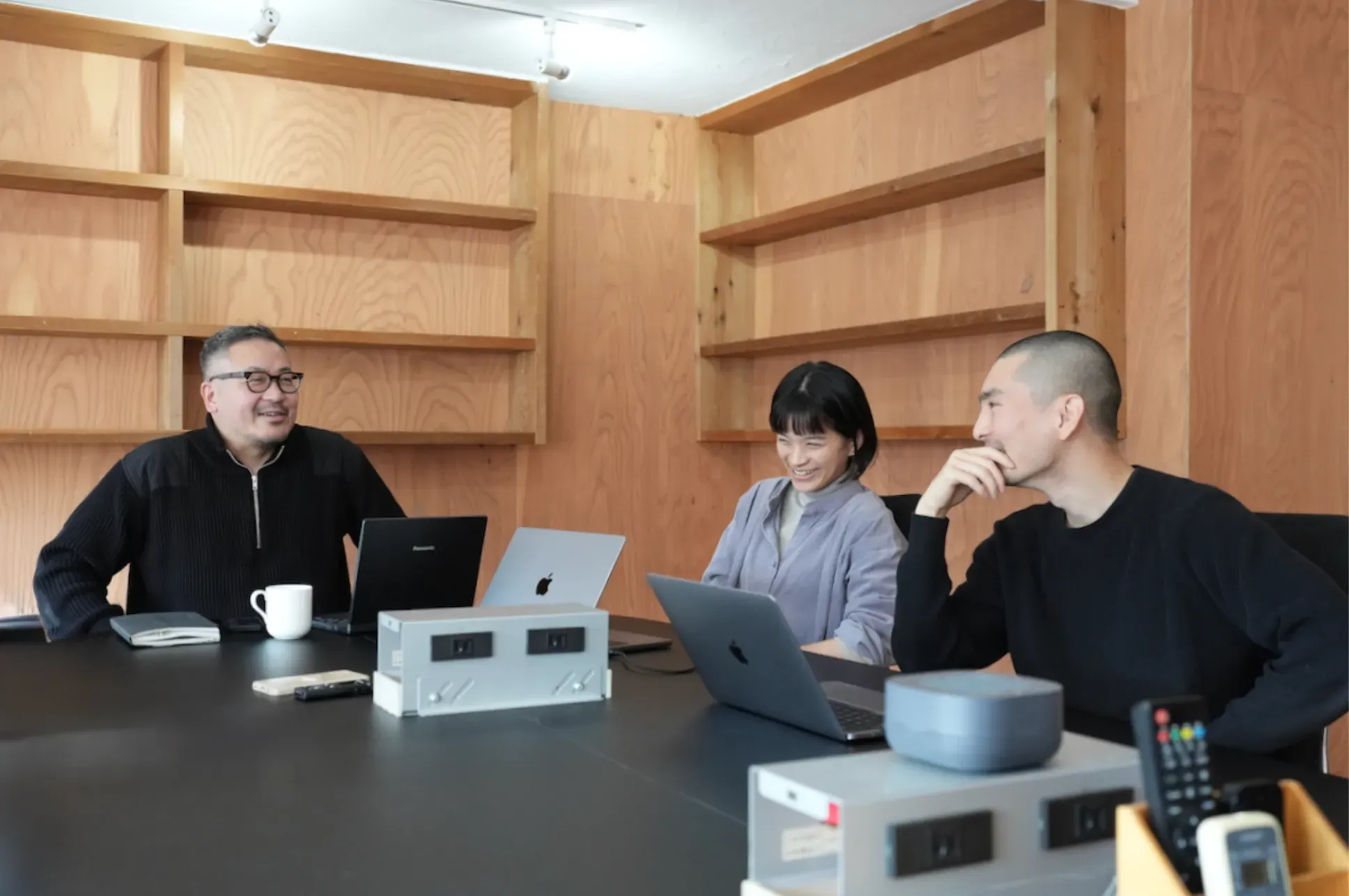
This time, we spoke with Tatsuta, Yamada, and Motoki, members of the team who were involved in the renovation of the main conference room.
The person who spoke
Tatsuta Yoshihiro
Web & Digital Solutions Business Manager. He felt the need to come to the office and work together in the same space, so he joined the meetings.
Maki Yamada is mainly in charge of web direction in her regular work. In her internal work, she is involved in running the Monosas website and sports day events.
He is based at the headquarters of Motoki Yoshikazu and has been creating an environment where Monosus members can work comfortably. He plans to retire from Monosus at the end of 2025 and travel for a while.
The gathering system began with the discussion of rules for coming to work
--First of all, please tell us what a "yoriai" is.
Tatsuta: After the COVID-19 pandemic subsided, the executives started talking about increasing the number of employees coming to the office. I personally agreed with this idea, but there was strong opposition from the workplace to the rule of "coming to the office three days a week."
I think it wasn't so much the content itself that caused discomfort, but rather the process of deciding the rules. So we thought, wouldn't it be better if people who wanted to talk about this topic got together and decided the rules themselves? And so the Gathering began.
Monosus is a company that has many opportunities to come into contact with local initiatives, and in rural areas, there is a culture where neighbors gather together to discuss decisions. We decided to incorporate this format into the company, and first get everyone to think together about "what the rules for coming to work should be." This was the first time we had ever held a "gathering."
──So the members gathered together and discussed the rules for coming to work.
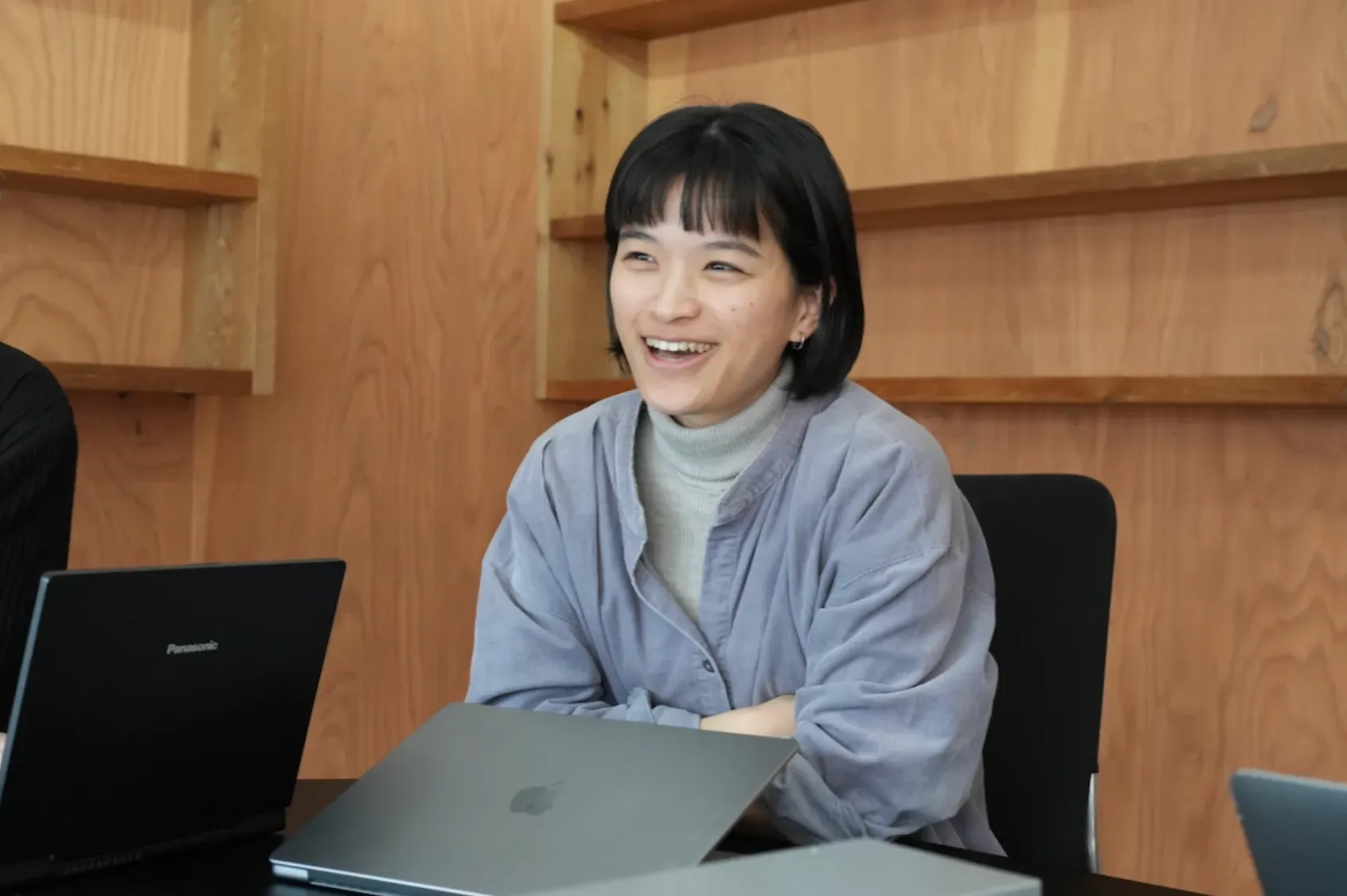
Yamada : Yes. But we didn't start by discussing the rules. We started by getting everyone to write down everything they were thinking. We used Miro to write down everything, including their opinions about coming to work and any vague feelings they had.
Tatsuta : That was the most complicated time...everyone's emotions were really on display.
Motoki: That's right.
Tatsuta: A variety of opinions and feelings were expressed, but no one was opposed to creating rules for coming to work. Most of the opinions were about the degree of the rules and how to proceed.
So, first we got everyone to express their thoughts, and then we sorted out the objectives. I think this is the standard way to proceed, but once the objectives were decided, it felt like half the work was done.
Why do I go to work? The moment I understand my purpose
How did you organize your "purpose"?
Yamada: When we thought about why we should come to the office, various ideas came to mind, such as "we want to promote active communication" and "we want to value young people." They were all true, but they were all scattered and we couldn't come to a consensus.
But then, suddenly, I had a moment of insight. Monosus's personnel policy and the "purpose of coming to work" became linked.
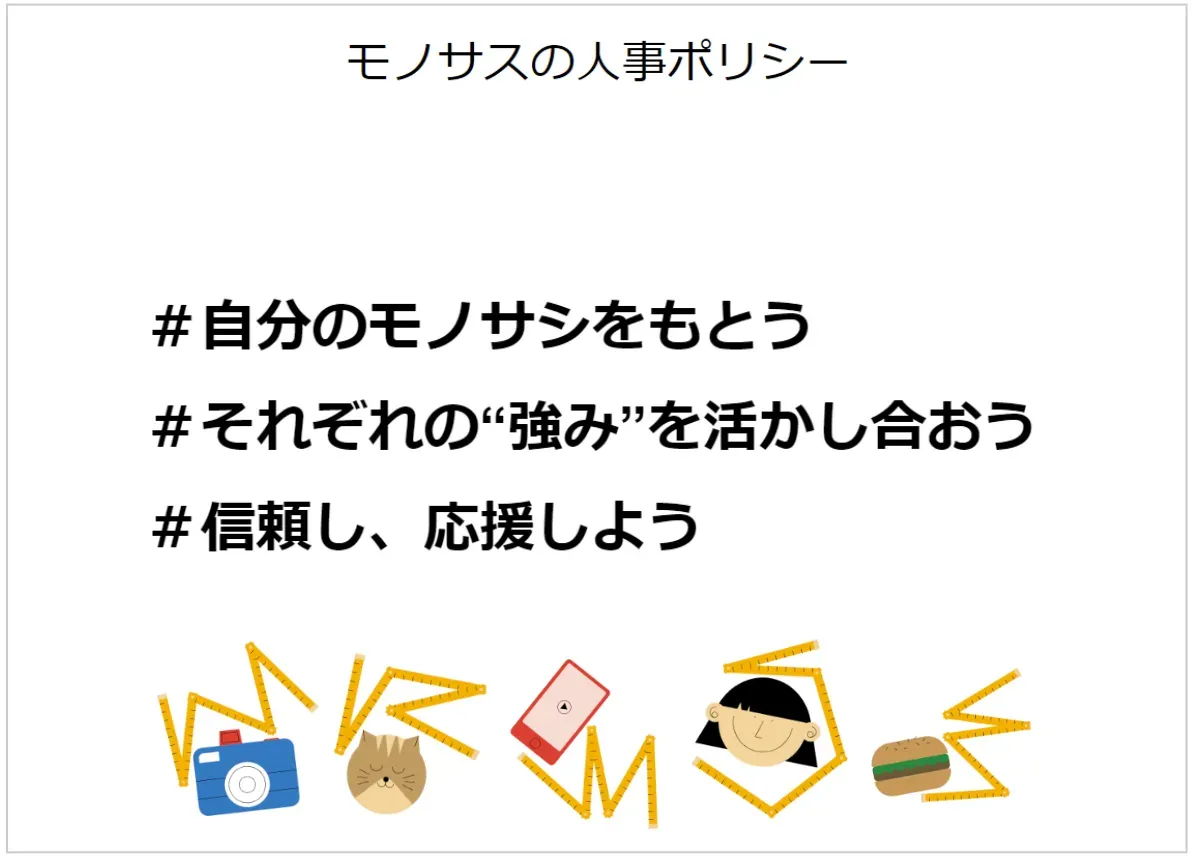
Our personnel policy is based on three words: "Use your own standards," "Make use of each other's strengths," and "Trust and support each other."
The second and third points in particular were that in order to utilize each other's strengths, it was necessary to get to know each other, and that trust and support are only born through daily efforts. It made perfect sense to me, "Ah, so that's why coming to the office is necessary."
Motoki: After going through this process, we were finally able to articulate the purpose of coming to work by linking it to our HR policy of "making the most of each other's strengths" and "trusting and supporting each other."
For example, it includes things like, "Close contact creates an opportunity to learn about other people's and your own strengths," and "The accumulation of physical experiences develops the imagination to think about things that are not right in front of you."
To achieve this goal, I came to the conclusion that I would go to the office four times a month.
Tatsuta: I myself felt a strong need to come into the office. This is because some of our younger members, who had been working during the COVID-19 pandemic and had only ever spoken to clients online, were so nervous during face-to-face meetings with clients that their hands were shaking.
I was surprised at how much it was, and at the same time, I thought, "This can't go on like this." Online may seem more relaxed and efficient, but there are some things that are difficult to do without face-to-face contact, such as supporting growth and providing mental care.
Therefore, the purpose of this visit to the office also includes a strong desire to "develop young people."
How close can we get to the ideal under limited conditions?
──The renovation of the main conference room, which was undertaken following the review of rules for coming to the office, was this something that came about naturally during the meetings?
In fact , Motoki had been working on a project separate from the meeting for some time. Led by our CEO, Manabe-san, there was talk of "remaking the main conference room." Of course, we wanted to increase convenience, but we also wanted to create a space that fosters communication between employees. We also wanted to give it a look that was characteristic of Monosus, and that people could feel attached to.
During the meetings, there were voices saying, "We want to make the main conference room better," so we started moving forward in earnest, integrating this with the main conference room remake project.
Looking back at our conversations, Yamada says that the idea first came up on November 27th of last year (2024). From there, we spent almost a year renovating the building, which was completed in October of this year.
How did the process to completion progress?
Yamada: First, we took stock of how this room is used. We use it for meetings, workshops, and interviews. So, what is it that this room is currently lacking?
For example, at the time there were only about three lights and it was very dark. First of all, I wanted to brighten it up. One wall was black, but I felt that made the room look even darker.
As we continued to discuss this, we ultimately settled on the current wood-toned atmosphere, but there was also an idea that suggested making the walls all white.
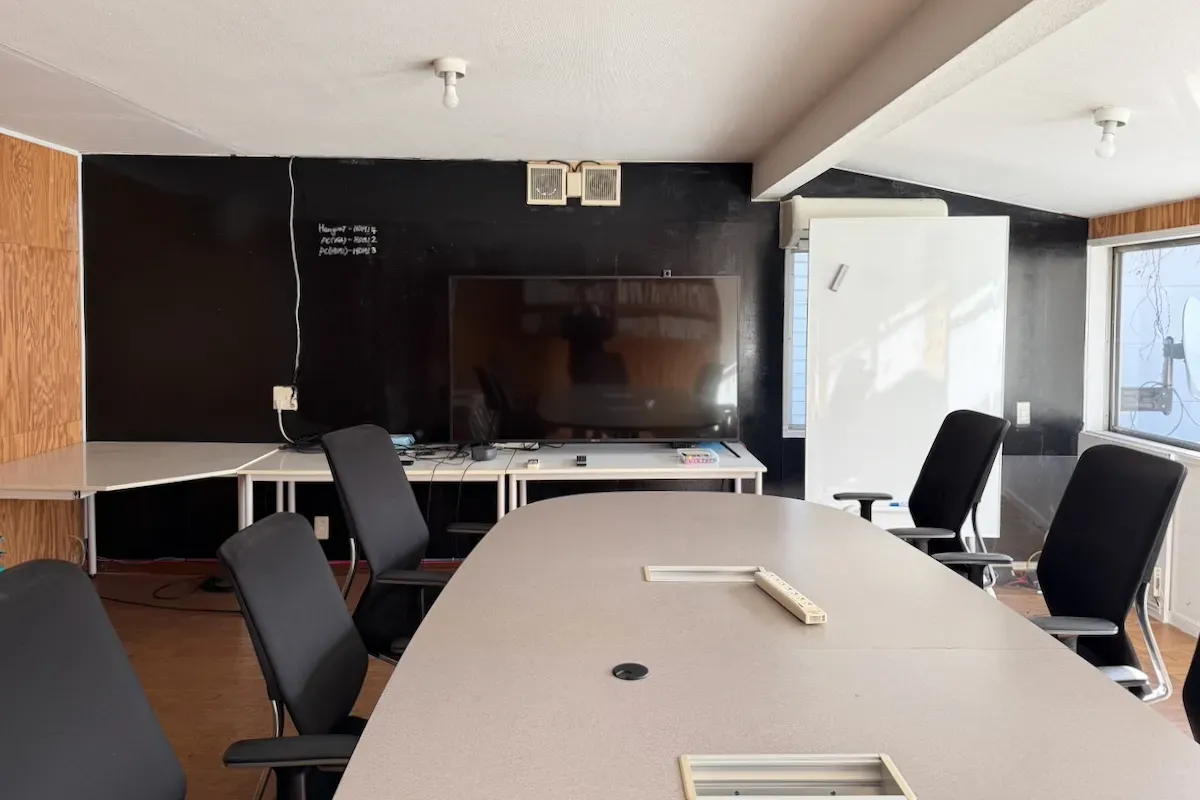
──The black walls before the renovation were quite striking.
Tatsuta: That's right. This was painted by volunteers who got together on their days off. They thought, "A normal whiteboard isn't interesting, so let's turn the wall into a blackboard." They used a special paint, but it was hard to remove, so it gradually fell out of use... In the end, it just became a plain black wall (laughs).
Yamada: We talked about getting rid of the black walls from the beginning. We also wanted to remove the tire marks on the floor. We also had other ideas, such as whether to remove the shelves on the wall, whether to put up new shelves, and how to tidy up the mess of cables. We had a limited budget, so we discussed how much we could do and made decisions one by one.
Motoki: We spent quite a bit of time considering that. I remember we were constantly talking about it for the first two or three months.
After thinking about it like that, I came up with some clever ideas that didn't cost a lot of money. In fact, the tabletop of this desk can be used upside down.
──Huh...? Can I take a look?
Tatsuta : See, there's this strange protrusion here? It was originally a metal fitting attached to the underside of the tabletop, but because it's being used upside down, it's sticking out like this.
Yamada : The designer came up with this idea, taking into consideration that we didn't have the budget to replace our desk.

There is no leader. Those who are good at it naturally take the lead.
──As the project progressed, was there a division of roles, such as a leader?
Yamada: I don't think there was a clear sense of "this person is the leader." There were people who were somehow running the meetings, but there was no sense that roles were decided.
Tatsuta : Yes. I don't really feel like there was a leader. However, it felt like a central figure naturally emerged for each theme.
Yamada-san was in charge of the overall progress, and when it came to construction, Motoki-kun, who worked in interior design in his previous job, took the initiative. When it came to putting together the details of the free address system as a proposal, designer Takita-san created it.
──So each person's strengths became their role.
Yamada: I've always been the one to take charge and decide the direction things should go. For some reason, I can confidently say, "I think this is the best!" (laughs).
Motoki: I had the construction knowledge I'd gained in my previous job, and I've always loved DIY. To keep the budget down, I would take on tasks that I thought I could do myself.
──What kind of position did you hold, Tatsuta-san?
I'm a member of Tatsutaichi .
Yamada and Motoki : Huh...?! (laughs)
Motoki : It's not like I'm just a member (laughs).
Yamada: I feel like Tatsuta-san was always looking at things from the perspective of, "Is this okay as a company?" He would say, "Isn't that wrong?" at important times.
Tatsuta : No, I don't have that intention at all.
Because Motoki has a long history with the company, I feel like he shared a sense of what makes it "Monosus-like."
Tatsuta: I wonder... I think I just talked a little when everyone else was quiet (laughs).
It's natural to have different opinions. We need to come together over time.
-- Were there any difficulties you encountered while working on this project?
Motoki : Of course, there were times when our opinions differed. Even among the members of the meeting, each had different ideals, and there were times when we couldn't move forward. But it wasn't difficult in a bad way, and I just kept thinking, "That's how it is."
Yamada : It was certainly quite difficult to reach a consensus. It wasn't decided just because someone said, "Let's go with this." We couldn't move forward unless everyone present agreed. There were times when we just couldn't make any progress.
How did you overcome that?
Yamada: We talked about the same thing over and over again. I think there was a time when we were constantly discussing the same topic for about a month and a half.
It took Motoki months and days, but on the other hand, I think this result was possible because we took the time to get together.
--I see. What did you think, Tatsuta-san?
Tatsuta: In the end, we had to be careful when we decided on the frequency of coming to the office as a rule. Even if everyone was "agreeable," that doesn't mean they were "satisfied." So we had to talk through the matter and find a compromise that everyone could accept.
However, personally, I don't think I had much trouble with the renovation of the main conference room or the free address system that is currently underway.
Listening to you two talk now, it seems like it was quite difficult (laughs).
People work together. Sometimes opinions differ, and things don't move forward easily. That can be tough, but as someone who works alone as a freelancer, I feel a little envious and think, "It must be nice to have friends."
The large conference room that you all designed was bright and a very pleasant space.
ENNA Keiko
A freelance writer based in Miyota Town, Nagano Prefecture. Interested in areas of lifestyle, work style, and social good, primarily writing interview articles.