
WEATHER: Cloudy
HUMIDITY: 86.92%
The rainy season in the Kanto region is on the verge of ending. Even in Tokyo, we're experiencing a heatwave with temperatures exceeding 30°C. The temperature doesn't drop even at night, and the humid air feels heavy. Instead of the excitement of summer being here, I'm feeling apprehensive, thinking, "It's finally here... will I be able to survive this summer?" I know people around me who have already suffered from heatstroke, and unexpected dangers are lurking, so please take care of yourselves and don't overexert yourselves.
Even in this heat, the wood ear mushrooms are thriving. We should all try to emulate the resilience of these mushrooms. This time, we'll delve a little deeper into the wood ear mushroom.
When I hear the word "wood ear mushroom," I immediately think of Chinese food! I also love eating wood ear mushrooms. The crunchy texture gives me an indescribable feeling of satisfaction. There are only a few in the mixed vegetable stir-fry, so I always savor each one carefully.
However, at the shiitake mushroom cultivation site where I used to work, wood ear mushrooms and similar fungi were treated as unwanted bacteria. In fact, they were considered a nuisance if they proliferated, and were viewed with some caution. I remember witnessing firsthand how the value of something can change drastically depending on one's perspective.
There are several reasons why certain bacteria are considered "unwanted bacteria," such as hindering the growth of the mushrooms you want to cultivate or stealing their nutrients. Among them, wood ear mushrooms are said to be particularly strong, thanks to their wide temperature range of adaptation, ability to survive harsh environments, and vigorous reproductive capacity.
Having actually grown them myself, I've come to appreciate their resilience. While other mushrooms often succumb to heat or dryness and cannot recover, wood ear mushrooms, even if they dry out during their growth process, can recover with plenty of water afterward. They also continue to grow day by day even in places that are too hot to tolerate. In fact, they are a summer mushroom that doesn't grow well in colder weather.
They can withstand extremely hot environments, but water is absolutely essential. In the mountains, you always see wood ear mushrooms growing on the underside of branches, that is, in the direction where water is dripping. No explanation is needed. As I've written before, you learn in every situation that mushrooms are very honest creatures.
Many of you are probably curious about the nutritional content of wood ear mushrooms, which are rich in calcium, iron, potassium, vitamin D, and dietary fiber (insoluble and soluble). Although wood ear mushrooms are sometimes dismissed as bacteria, their appeal is far from ordinary.
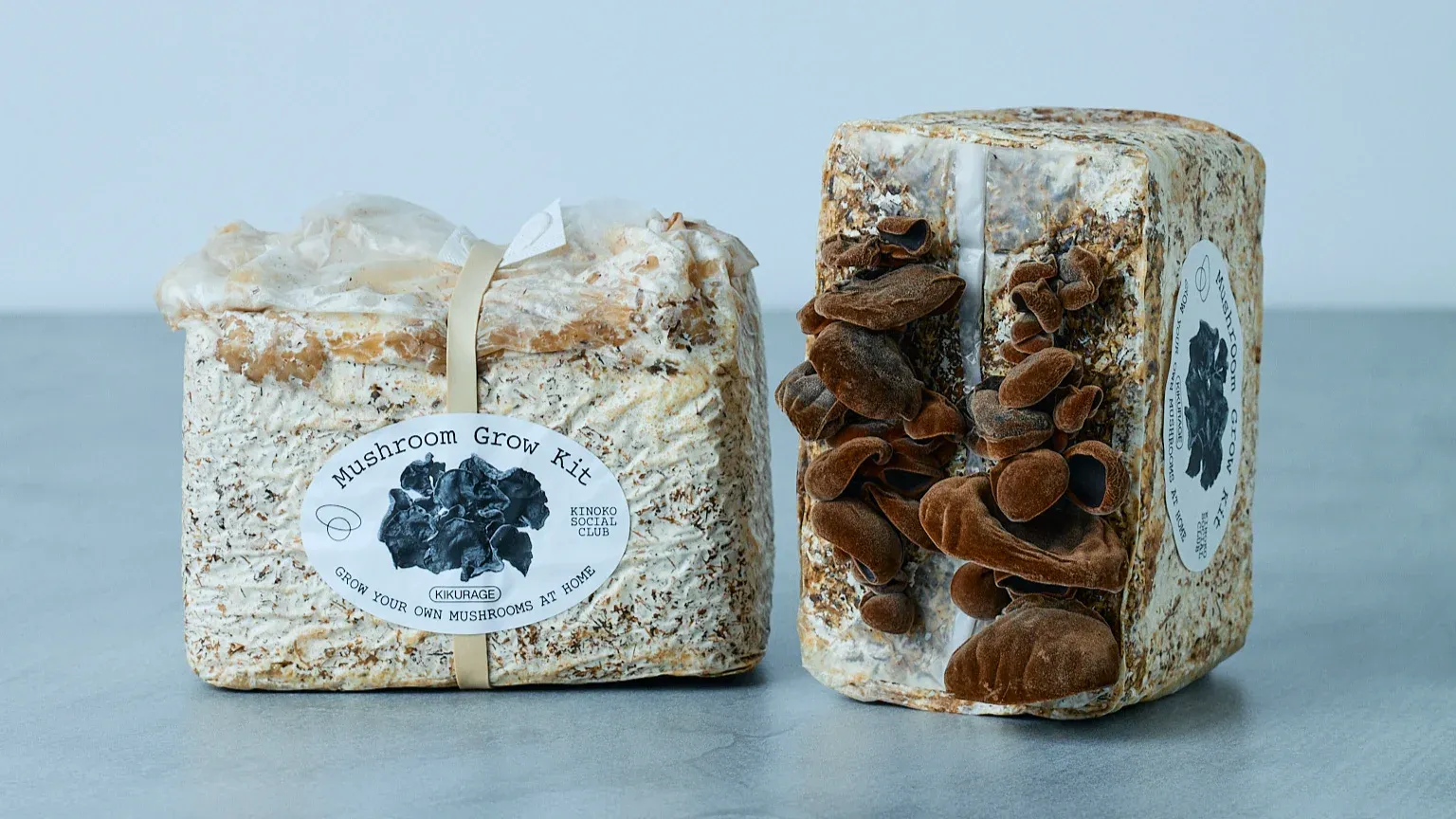
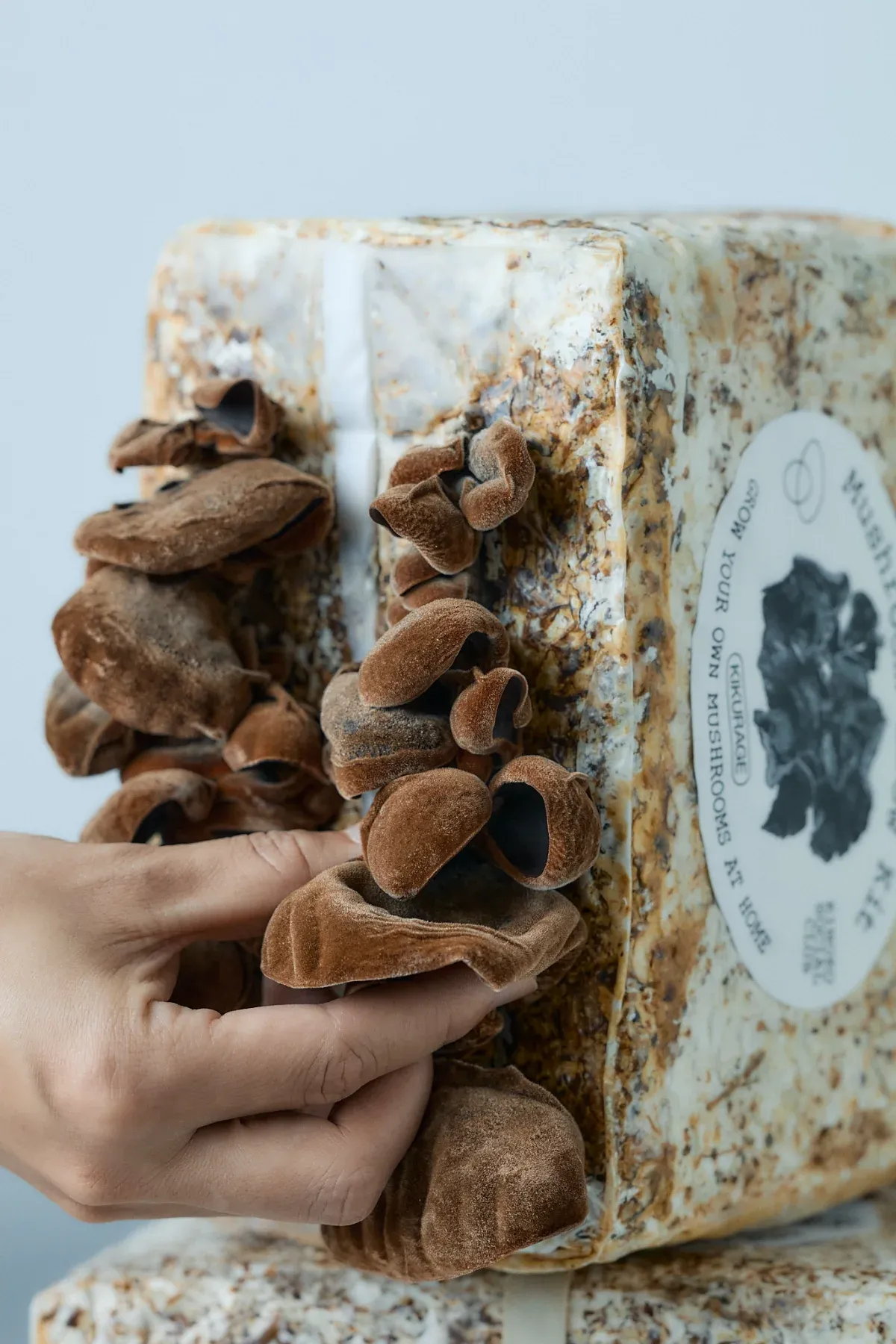
The Mushroom Grow Kit sold by KINOKO SOCIAL CLUB allows you to grow a type of wood ear mushroom called "Auricularia polytricha" (rough-haired wood ear mushroom). As the name suggests, it is characterized by its fine hairs. We have taken photos of the mushrooms that have grown to perfectly capture this characteristic, so please take a look. Instructions and tips on how to grow them are posted on the KSC website !
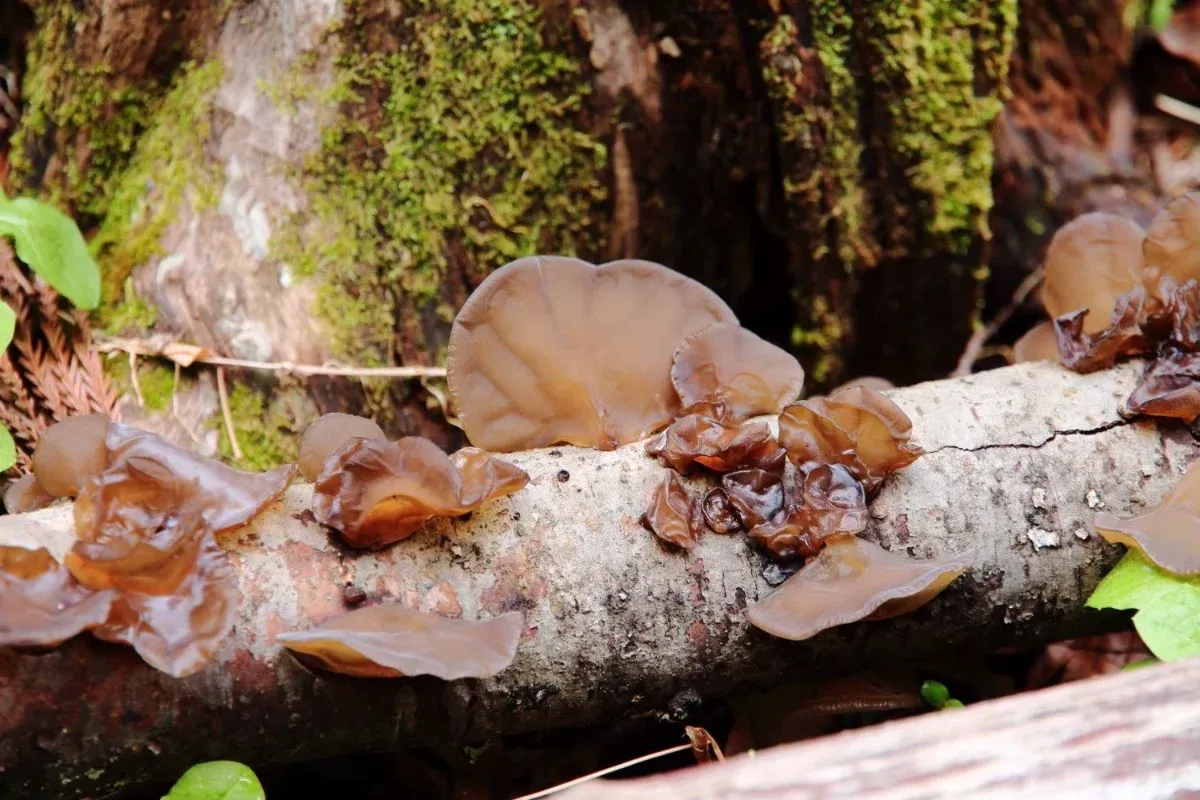
This is a wild wood ear mushroom I found in Yamanashi Prefecture some time ago. (It doesn't seem to be Auricularia polytricha.)

Mayu